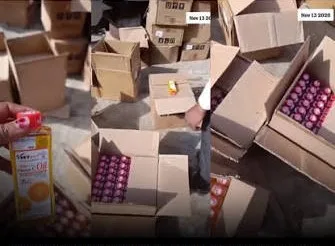

The National Agency for Food and Drug Administration and Control (NAFDAC) has uncovered a warehouse containing millions of doses of counterfeit medicines and cosmetics at the Trade Fair Market in Lagos State.
The operation, which resulted in the seizure of more than 10 million doses of fake products valued at approximately ₦3bn, also led to the arrest of four suspects.
NAFDAC’s Director of Investigation and Enforcement, Dr Martins Iluyomade, disclosed the development during a media briefing in Apapa, Lagos, explaining that the agency acted on intelligence received on February 3, 2026.
According to him, the products were concealed in a three-storey building disguised as a spare-parts warehouse, making it difficult for unsuspecting people to identify the premises as a storage facility for counterfeit medicines.
Items recovered included fake anti-malarial drugs, injections for cerebral malaria, antibiotics and other pharmaceutical products.
The agency also discovered banned medicines, including Postinor and Analgin, which Iluyomade said had been prohibited in Nigeria for several years.
He expressed concern that some of the counterfeit medicines were so closely replicated that even authorised manufacturers could find it difficult to distinguish them from genuine products.
Iluyomade said eight truckloads of the seized medicines and cosmetics were evacuated from the premises during the operation.
He described the discovery as a major breakthrough in the agency’s efforts to combat the circulation of fake and substandard medical products in the country.
The NAFDAC official warned that the products could have exposed millions of Nigerians to serious health risks if they had entered the market.
He urged pharmaceutical distributors to obtain their products exclusively from NAFDAC-accredited manufacturers and authorised sources.
The four suspects arrested during the operation were taken into custody as investigations continued into the activities of those allegedly involved in the counterfeit products trade.

The discovery highlighted continuing concerns over the circulation of fake medicines in Nigeria, particularly products intended for the treatment of serious illnesses.
Counterfeit antibiotics can contain incorrect or insufficient active ingredients, potentially resulting in treatment failure and contributing to antimicrobial resistance.
NAFDAC has repeatedly warned Nigerians against purchasing medicines from unlicensed vendors and urged consumers to report suspicious products and storage facilities to the agency.
The agency also called on members of the public to remain vigilant and ensure that medicines are purchased from registered pharmacies and authorised outlets.

AbdulBasit Saba is a journalist and contributor to Freelanews.com, covering news, business, and public affairs.