

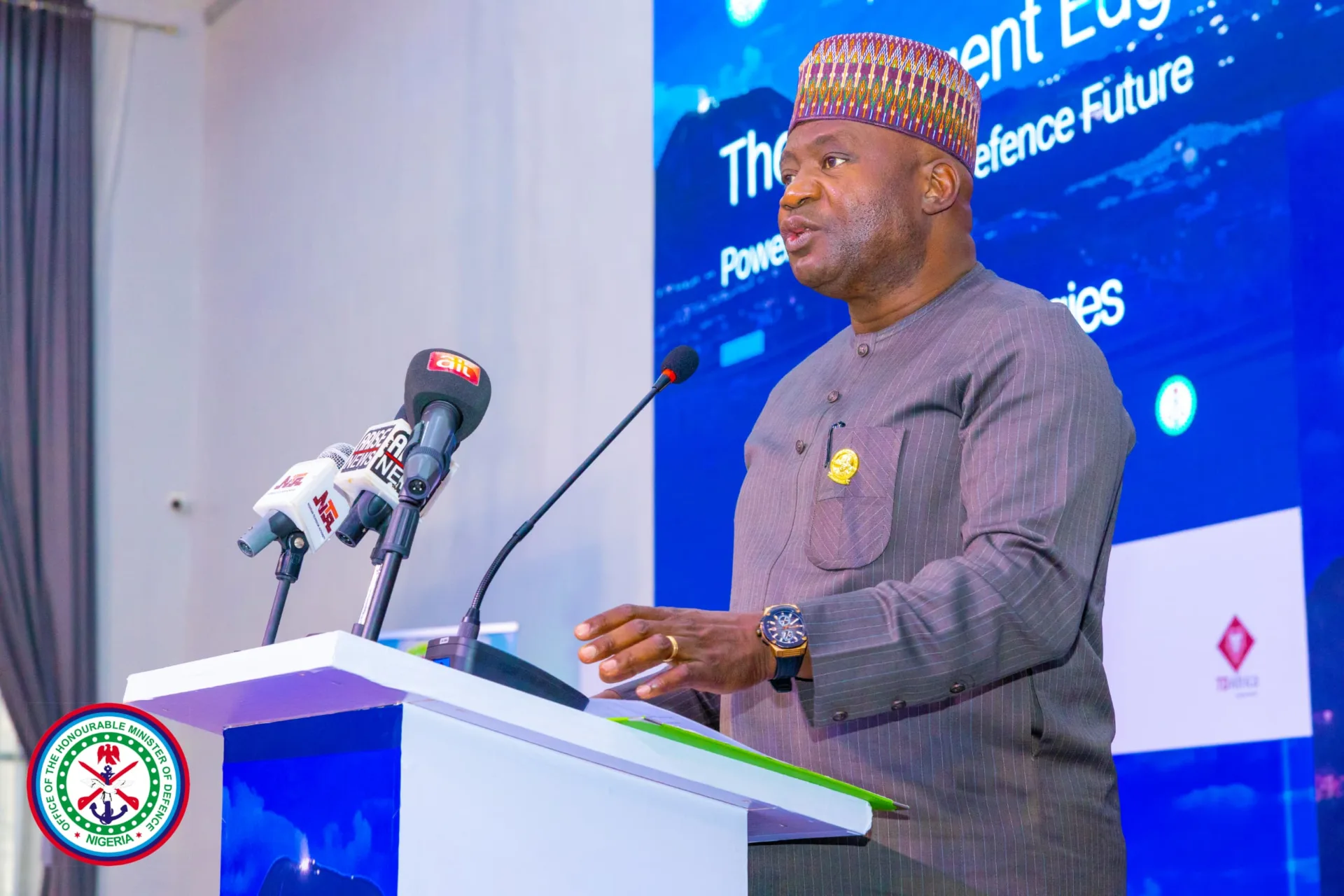

Nigeria’s Minister of Defence, General Christopher Gwabin Musa (retd.), has urged military leaders, defence experts and technology stakeholders to strengthen indigenous defence technology and reduce the country’s reliance on foreign solutions, during a strategic workshop held at the Armed Forces Officers’ Mess in Asokoro, Abuja, on Tuesday, 24 November 2026.
Speaking at the opening of the two-day Ministry of Defence and Dell Technologies Strategic Workshop, which concluded on 25 November, Musa said technological innovation had become central to modern warfare, military planning and effective security operations.
Also read:Tinubu congratulates Atiku at 80, recalls backing his 2007 presidential bid
The workshop, themed “The Intelligent Edge: Powering Nigeria’s Defence Future,”focused on how artificial intelligence, data analytics, digital infrastructure and emerging technologies could improve the country’s defence capabilities.
Musa warned that Nigeria could not afford to treat technology as an optional addition to its military strategy, particularly as security threats continue to evolve and demand faster, more informed responses.
“Technology is no longer optional; it is an essential pillar for effective military strategy, operations, and informed command decision-making,” he said.
The minister explained that emerging digital tools were changing how threats were detected, assessed and neutralised, making it increasingly important for military personnel to have access to reliable technological systems that support operational efficiency and intelligence gathering.

He stressed, however, that modernisation should not be limited to purchasing equipment from international suppliers. Nigeria, he said, must gradually develop the expertise to operate, maintain, adapt and manufacture relevant technologies locally.
“Our objective must be to progressively build the capacity to operate, maintain, adapt, and where feasible, manufacture technologies tailored to our unique national requirements,” Musa said.
His remarks placed emphasis on technology transfer, technical training and strategic partnerships with international companies, arguing that such collaborations should help Nigeria build lasting expertise rather than deepen dependence on external providers.
The minister aligned the initiative with President Bola Ahmed Tinubu’s security vision, noting that local technological capacity would be important in building a defence system capable of responding to Nigeria’s specific security challenges.
He also called for the benefits of defence innovation to extend beyond military institutions, particularly through the development of digital skills among young Nigerians.
According to Musa, building local technical expertise could contribute not only to security but also to economic development, employment and opportunities within the technology sector.
The minister challenged participants to ensure the workshop produced practical outcomes rather than discussions that failed to translate into implementation.
He directed that the closing communiqué identify the country’s critical technology gaps, priority requirements and clear follow-up measures, adding that the Ministry of Defence would review the recommendations for possible intervention.

The focus on actionable results reflects the broader challenge facing Nigeria’s defence modernisation efforts: turning technology ambitions into sustainable systems that can be maintained, secured and effectively deployed.
Earlier, retired Air Vice Marshal A.S. Bulus, who organised the workshop on behalf of the ministry, emphasised the importance of protecting sensitive military information while developing modern digital infrastructure.
Bulus said stronger digital systems could improve coordination between security institutions, reinforce information management and strengthen the operational resilience of the Ministry of Defence and the Armed Forces.
Country Manager of Dell Technologies Nigeria, Abimbola Owoeye, also called for a shift from fragmented annual information technology spending towards a coordinated, long-term investment strategy capable of delivering measurable improvements.
Owoeye stressed the importance of strong governance, accountability and infrastructure planning, urging Nigerian defence stakeholders to adapt international technological standards to the country’s operational realities.
He noted that access to reliable data, secure storage systems and effective digital infrastructure would be increasingly important in supporting intelligence, planning and decision-making across the defence sector.
The partnership between the Ministry of Defence and Dell Technologies reflects growing efforts to explore how private-sector expertise can support military modernisation.
However, the long-term value of such collaborations will depend on the extent to which they deliver practical skills, sustainable infrastructure, secure systems and genuine local technological capacity.
For Nigeria, the push towards indigenous defence technology represents an opportunity to strengthen national security while building a home-grown technology ecosystem capable of supporting future military needs.
Also read:Tinubu congratulates Atiku at 80, recalls backing his 2007 presidential bid
The challenge now is to translate the minister’s call into measurable progress, ensuring that technology partnerships result in lasting Nigerian expertise rather than continued dependence on imported systems.

Mariam Balogun is a contributor to Freelanews.com, covering news, business, and public affairs.