
Saint John Cross Seminary in Nsukka, Enugu State, is appealing for urgent financial and community support to resolve a prolonged water shortage affecting more than 350 seminarians and staff, following the breakdown of its only functional borehole and mounting costs of purchasing water for daily operations.
The institution’s water crisis has worsened as it now relies on commercial water vendors to sustain its academic activities, domestic needs and agricultural facilities, raising concerns about the wellbeing of students and the future of its farming investments.
Also read:Australian wildfires destroy homes, threaten island wildlife
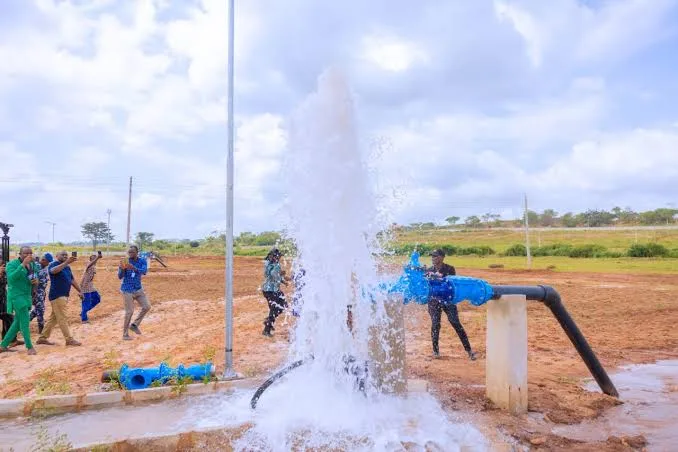
In response, Geo Inn Services Limited, a hydrology consultancy, has carried out underground water exploration at the seminary to identify suitable locations for new boreholes, offering the intervention as part of its corporate social responsibility initiative.
The company’s Chief Executive Officer, Dr Innocent Ezeugwu, said his decision to support the institution was rooted in personal experience, having encountered water scarcity during his time as a seminarian at Saint John Cross.
Ezeugwu explained that his experience helped shape his decision to study geology, with the ambition of contributing to solutions for water challenges affecting communities.
“As a young seminarian at Saint John Cross, I experienced what it means to live without reliable sources of water. After my apostolic work, I chose to study geology because I want to address water problems of society,” he said.

He noted that poor underground water investigation was a major reason boreholes failed, stressing the importance of proper geological assessment before drilling to improve the chances of finding sustainable water sources.
The consultancy has reportedly identified locations with promising groundwater potential and submitted its technical findings to the seminary, but the next phase, drilling and installation, requires funding.
Ezeugwu appealed to alumni, charitable organisations, public-spirited individuals and government representatives to help finance the project, describing the institution as an important educational and religious centre serving the wider society.
The Rector, Rev. Fr. Dr Ferdinand Odo, described the shortage as a longstanding problem that has become more difficult following the failure of the institution’s borehole, which previously provided water for its daily needs.
According to Odo, the seminary currently purchases four tankers of water every day to keep its facilities running, placing additional financial pressure on the institution at a time when it is managing several ongoing projects.
The shortage is also affecting the seminary’s agricultural activities, including its fish ponds, poultry farm, piggery and cattle ranch, all of which depend on a consistent supply of water.
“We buy four tankers of water every day from vendors to keep the seminary running because we have many ongoing projects.
We have our agro sector that requires daily water supply. I’m about to sell out the fish because we can’t sustain them under this condition,” the rector said.
Odo explained that the previous borehole, installed in 2009, had a 30-horsepower pumping system that required substantial fuel to operate, making it expensive to maintain even before it broke down.
The seminary is now seeking alternative boreholes fitted with lower-capacity pumps of about 10 horsepower, which could be powered by solar energy and reduce its running costs.

He said the institution would still retain the option of using a larger water source when demand increased, but stressed that more sustainable alternatives were urgently needed.
The rector thanked Geo Inn Services Limited for conducting the groundwater exploration without charge, describing the initiative as a meaningful first step towards easing the institution’s difficulties.
He appealed to government representatives, charitable organisations, alumni and individuals to support the actual drilling, noting that the technical exploration had been completed but construction remained capital-intensive.
“These seminarians are our future priests. They are already under pressure, so if we add water to it, it makes the journey very difficult,” Odo said.
The intervention forms part of Geo Inn Services’ free groundwater exploration initiative for communities in Enugu North Senatorial District, aimed at helping communities identify viable drilling locations before investing in boreholes.
The initiative has also attracted support from traditional rulers, who have expressed concern about the repeated failure of boreholes in communities where residents invest considerable resources in water projects that eventually dry up or collapse.
For Saint John Cross Seminary, however, the immediate priority remains securing a dependable water source for its students, staff and agricultural facilities.
The appeal highlights how access to water, an essential resource often taken for granted, can become a major challenge for educational institutions, affecting students’ welfare, institutional operations and the sustainability of livelihoods.
Also read:Australian wildfires destroy homes, threaten island wildlife
With groundwater exploration completed and suitable locations reportedly identified, the seminary is now looking towards public support to move the project from technical assessment to actual drilling, offering hope of a lasting solution to its water crisis.

Mariam Balogun is a contributor to Freelanews.com, covering news, business, and public affairs.