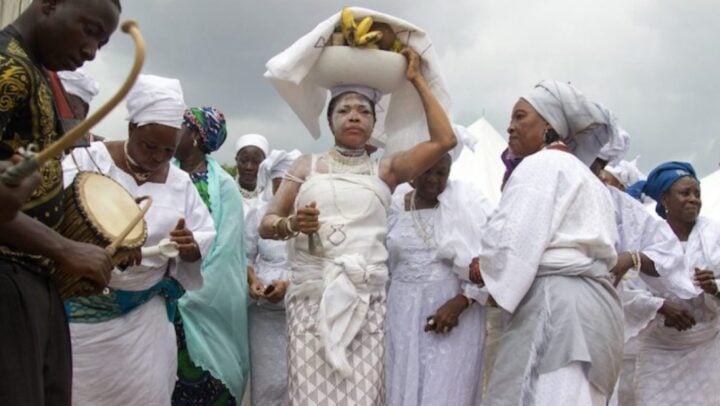



Ilorin has witnessed rising religious tensions as Isese worshippers face threats, harassment and restrictions in a predominantly Muslim city, raising concerns over religious freedom in Nigeria
Long before the January 2026 arson incident involving a traditional worshipper’s home, Ilorin has been a flashpoint for religious tensions between some Muslim groups and practitioners of Isese (Yoruba traditional religion).
The city, known for its strong Islamic heritage under the Ilorin Emirate, has witnessed repeated confrontations, threats, and restrictions on traditional practices dating back to at least 2023.
These incidents highlight ongoing debates over religious freedom in a predominantly Muslim area.
The most prominent clashes erupted in 2023 surrounding plans for Isese festivals.
In July 2023, an Osun priestess, Yeye Ajesikemi Olokun Omolara Olatunji (also known as Yeye Adesikemi Olokun), announced a three-day Isese event in Ilorin.
Flyers circulated online, prompting a swift backlash. A Muslim group, Majlisu Shabab li Ulamahu Society, stormed her residence, warning her against holding the festival and claiming it was incompatible with the city’s Islamic culture.
The group stated they were acting on instructions from the Emir of Ilorin, Alhaji Ibrahim Sulu-Gambari, who had publicly opposed such events as “alien” to Ilorin traditions.
The priestess reported receiving death threats and harassment, forcing her to cancel the event.
She described living peacefully in Ilorin for years until the controversy, noting that neighbors distanced themselves amid the threats.
Nobel laureate Wole Soyinka criticized the Emir in an open letter, accusing him of fostering intolerance and comparing the situation to broader religious extremism.
Shortly after, in another July 2023 incident, videos emerged of Muslim clerics disrupting Isese worshippers performing rituals at a riverbank in Oko Owo, Ilorin.
One cleric threatened to stone an unidentified Osun priestess and her followers, chanting demands for them to leave while accusing them of idolatry.
Tensions escalated further when the International Council for Ifa Religion planned an Isese Youth Festival for August 20, 2023, in Ilorin.
The Kwara State Council of Ulama (Islamic clerics) issued warnings, stating the event posed risks to peace and that Ilorin Emirate areas (including Ilorin West, East, South, Asa, and Moro) would not permit it.
Police advised relocating the festival, citing security concerns, and it was eventually suspended to avoid confrontation.
In August 2023, Muslim youths stormed a rented shop used by Isese adherents for gatherings, giving an eight-day ultimatum to vacate or face chaos. Videos showed clerics threatening to destroy property and referencing police awareness.
Related arrests occurred, such as that of Isese activist Adegbola Abdulazeez (Talọlọrun) in 2023 for allegedly insulting the Emir and Muslim leaders, amid the festival disputes.
These events drew criticism for violating constitutional religious freedoms, with human rights advocates and figures like Soyinka highlighting hypocrisy and intolerance.
While no major incidents were widely reported in 2024-2025 matching 2023’s intensity, threats reportedly persisted, culminating in November 2025 warnings against the victim of the 2026 arson.
Also read: Gambari and the delicate dance of Ilorin
Community leaders have urged dialogue, but the pattern reinforces vulnerabilities for traditionalists in Ilorin, raising questions about coexistence in Nigeria’s multi-faith society.

Ojelabi, the publisher of Freelanews, is an award winning and professionally trained mass communicator, who writes ruthlessly about pop culture, religion, politics and entertainment.