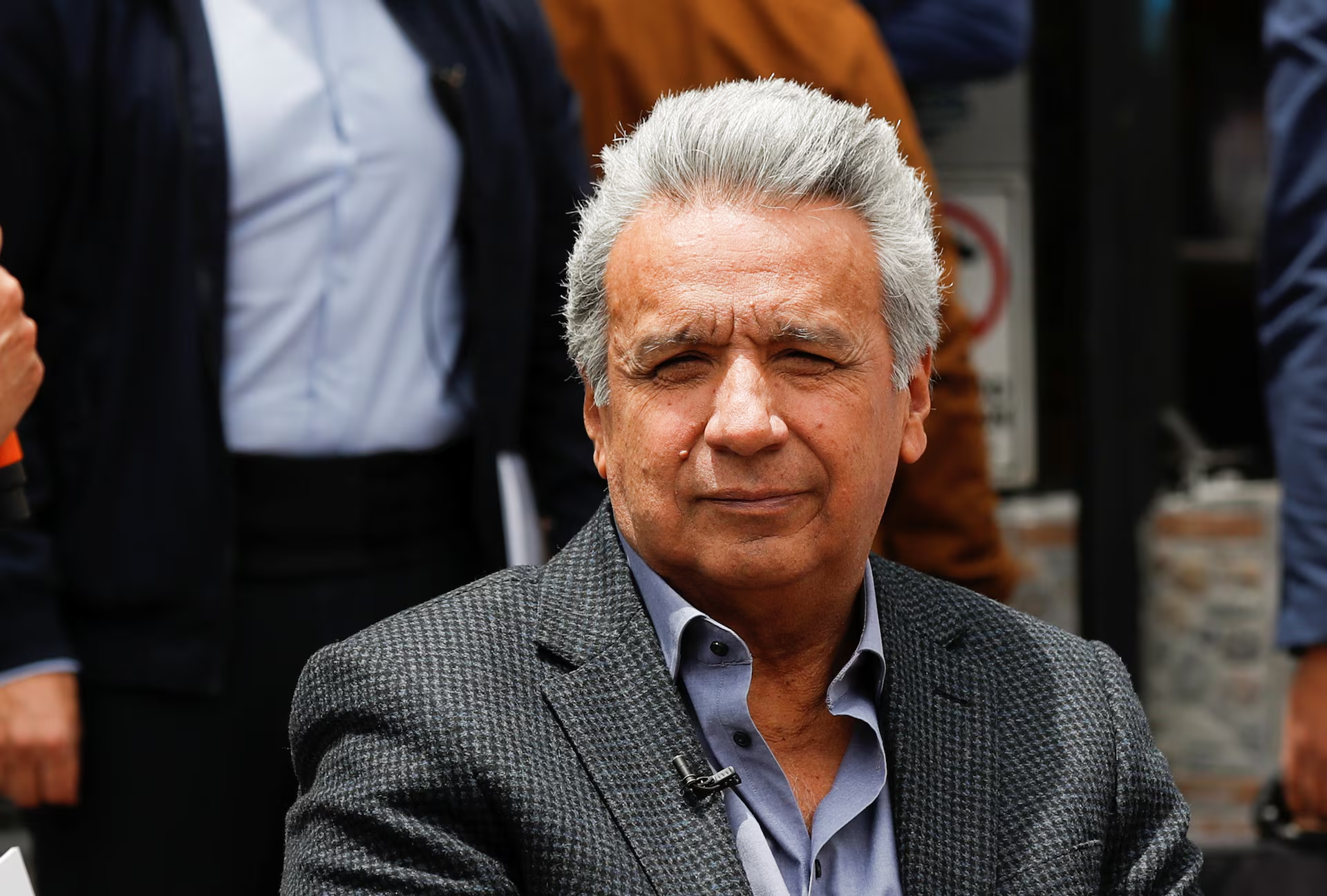

Lenín Moreno was convicted over alleged bribes linked to a Chinese-built hydroelectric dam, while his wife and relatives also received prison terms
Former Ecuadoran President Lenín Moreno was sentenced to five years in prison on Friday, August 28, 2026, after an Ecuadoran court found him guilty of accepting bribes linked to the construction of the country’s largest hydroelectric dam.
Also read: Court jails Canada returnee 11 years over 2.5kg cannabis
Moreno, 73, was among 20 people convicted in the corruption case involving the Coca Codo Sinclair project, which was built by Chinese state-owned company Sinohydro.
Ecuadoran prosecutors said Sinohydro paid a total of $76 million in bribes, equivalent to about four per cent of the project’s construction cost.
The Moreno five-year sentence was below the six-and-a-half-year prison term sought by prosecutors.

Moreno’s wife and other relatives were also sentenced to nearly three years in prison for complicity in the case, while two former managers of the power plant were among those convicted.
The former president, who served from 2017 to 2021, has announced plans to appeal the ruling.
He maintained his innocence after the verdict, insisting that he had never received money from Sinohydro.
“I have never received a single cent from Sinohydro,” Moreno said after the ruling.
Moreno also accused the political establishment associated with his former mentor, Rafael Correa, of orchestrating the case against him.
He described the proceedings as part of what he called “the Correa regime” and alleged that Correa had promised to retaliate against him after their political relationship deteriorated.
The case has its roots in the period between 2007 and 2013, when Moreno served as Correa’s vice-president.
Correa backed Moreno’s successful presidential campaign in 2017, but their relationship subsequently collapsed after Moreno moved away from his predecessor’s socialist policies, shifted towards the political right and developed closer ties with the United States.
The Coca Codo Sinclair project became one of the most significant infrastructure undertakings during Correa’s administration.
The massive hydroelectric facility was intended to expand Ecuador’s electricity generation capacity and reduce the country’s dependence on fossil fuels.
However, the project has also been dogged by controversy over its construction and allegations of corruption.
Prosecutors argued that the bribery network surrounding the project channelled tens of millions of dollars to officials and intermediaries.
The $76 million allegedly paid by Sinohydro represented approximately four per cent of the dam’s overall construction cost, according to prosecutors.
The convictions add to a difficult chapter in Ecuador’s political history, where successive administrations have faced allegations of corruption and disputes over the management of major public infrastructure projects.

Moreno’s political career has also taken an unusual international turn. After leaving Ecuador’s presidency, he served as the United Nations special envoy on disability and accessibility.
A paraplegic, Moreno became internationally recognised for his advocacy on disability issues before returning to Ecuadoran political controversy through the corruption proceedings.
Correa, meanwhile, has also been convicted in Ecuador in a separate corruption case. He has lived in Belgium and has denied wrongdoing.

Moreno’s conviction now places a former president at the centre of another major corruption ruling, although his planned appeal means the legal process is not yet over.
The case is likely to remain politically charged, given the bitter break between Moreno and Correa and the allegations of retaliation that Moreno has levelled against his former political ally.
For prosecutors, however, the ruling represents a significant conviction in a case involving one of Ecuador’s most important infrastructure projects.
Also read: Ghana court jails two Nigerians 20 years for trafficking
The final outcome will now depend on the appeal process and whether Ecuador’s higher courts uphold or overturn the convictions.

David Okere is a journalist and contributor to Freelanews.com, covering business, governance, public affairs, and human-interest stories with a commitment to accuracy, balance, and public interest reporting.