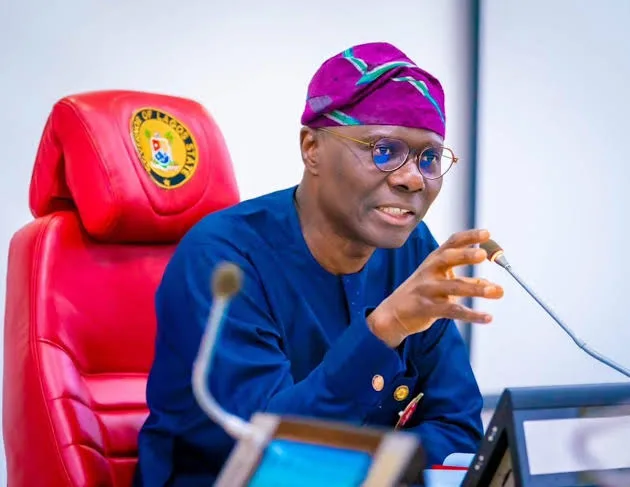

Lagos State Governor Babajide Sanwo-Olu has urged financial institutions and other stakeholders to develop accessible credit systems that will enable women, young entrepreneurs and small businesses to obtain financing and expand their operations.
Sanwo-Olu said the Federal Government’s $1tn economic agenda could only translate into meaningful growth if opportunities reached ordinary Nigerians, entrepreneurs and businesses across the country.
The governor, who was represented by the Head of the Research, Strategy and Training Department, Bolarinwa Mustapha, made the remarks at the fourth edition of the Africa Credit Expo (ACE 2026), held on November 13 at the J.F. Ade Ajayi Main Auditorium, University of Lagos.
The event, organised by CreditRegistry, was themed “Reimagining Africa’s Credit Economy: Unlocking Capital, Trust and Opportunity.”
Sanwo-Olu called on financial industry players to move beyond discussions and establish practical partnerships capable of strengthening credit infrastructure and expanding financial inclusion.

“I encourage stakeholders across the continent to move beyond discussion and build practical partnerships that will strengthen our credit infrastructure, expand financial inclusion, and make financing more accessible to women, young entrepreneurs, and small businesses,” he said.
He noted that although Africa had talented entrepreneurs, ambitious young people and businesses with significant growth potential, many continued to struggle to secure the financial resources needed to develop their operations.
According to him, access to capital, confidence in the financial system and trust are essential to creating an environment where businesses can thrive.
Sanwo-Olu Highlights Role of Credit Infrastructure
The governor said credit should be recognised as more than a means of borrowing money, describing it as an important instrument for economic growth and improved living standards.
He explained that access to affordable financing could help businesses expand, employ more people, improve productivity and contribute to economic development.
He also stressed the importance of reliable credit information, digital innovation and financial literacy in improving lending decisions and encouraging responsible borrowing.
Sanwo-Olu identified artificial intelligence and digital financial services as tools that could transform credit assessment and extend financial services to people who have traditionally been excluded from the formal financial system.
However, he warned that technological innovation must be accompanied by data protection, transparency and consumer protection measures.
He also highlighted the potential of campus work-study programmes to help students earn income and develop responsible credit habits while pursuing their education.
CreditRegistry Calls for Collaboration
The Managing Director and Chief Executive Officer of CreditRegistry, Dr Jameelah Sharrieff-Ayedun, said the expo provided a platform for stakeholders across the financial ecosystem to examine challenges affecting access to capital and the development of Africa’s credit economy.

She said discussions at the event covered reliable credit information, financial literacy, consumer protection, digital innovation and responsible lending.
“No single institution can reimagine Africa’s credit economy alone. Lenders, regulators, policymakers and innovators each hold part of the solution, and ACE exists to bring them into the same room,” Sharrieff-Ayedun said.
The expo featured keynote presentations, executive and student panels, fireside discussions, exhibitions and networking sessions involving financial institutions, policymakers, fintech operators, entrepreneurs and young professionals.
Among the issues examined were ways to improve financing for micro, small and medium-sized enterprises, address the credit gap affecting women and underserved communities, and strengthen financial knowledge among young people.
The organisers said the event was designed to encourage collaboration among institutions and businesses working to improve access to capital and build a more inclusive credit system across Africa.

AbdulBasit Saba is a journalist and contributor to Freelanews.com, covering news, business, and public affairs.