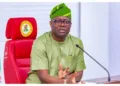
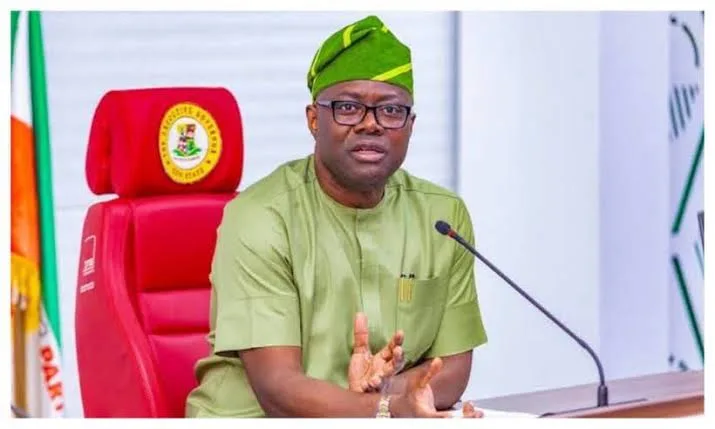

Oyo State Governor Seyi Makinde’s ambition to become Nigeria’s president in 2027 has drawn fresh attention, with public affairs commentator and former newspaper editor Bola Bolawole questioning whether the governor could emerge as an unexpected contender in the presidential race.
In his Treasures column published in the New Telegraph on Wednesday, November 18, 2026, Bolawole examined Makinde’s declaration that he was contesting the election to win, rather than merely to negotiate political concessions or improve his political standing.
The columnist said he had initially viewed Makinde’s ambition through the lens of the governor’s political disagreements with the Minister of the Federal Capital Territory, Nyesom Wike, but acknowledged that Makinde’s public declaration had prompted him to take the ambition more seriously.
Bolawole also considered other possible interpretations of the governor’s decision to contest, including the suggestion by some critics that presidential campaigns could serve as platforms for political bargaining. However, he noted that Makinde had rejected the idea that he was in the race for horse-trading.
Makinde, according to the columnist, had maintained that he was seeking the presidency to win and challenge the incumbent, President Bola Tinubu.

Makinde’s place in the 2027 race
Bolawole described Makinde as an underdog in a contest involving established political figures, including Tinubu, former Vice-President Atiku Abubakar and former Anambra State Governor Peter Obi.
He noted that the history of elections had shown that candidates who were initially underestimated could sometimes benefit from unexpected political developments and emerge victorious.
To illustrate the possibility, the columnist recalled the 1991 Lagos State governorship election, in which Sir Michael Otedola of the National Republican Convention defeated Chief Yomi Edu of the Social Democratic Party.
Bolawole attributed Otedola’s unexpected victory partly to divisions within the SDP, arguing that political circumstances could sometimes create opportunities for candidates who were not initially regarded as frontrunners.
He therefore raised the question of whether Makinde could become the long-awaited political dark horse in the 2027 presidential election or whether Nigerians should continue looking for another alternative.
Four pillars of the Reset Nigeria agenda
A major part of Bolawole’s assessment focused on Makinde’s 74-page manifesto, titled Reset Nigeria: A Governing Programme for a Productive, Secure, Capable and Accountable Federation.
The columnist described the document as a proposed social contract between Makinde and Nigerians, should he secure the mandate to lead the country.
In the manifesto, Makinde identifies challenges such as the rising cost of food, transportation, energy and housing, insecurity, inadequate educational outcomes and difficulties faced by businesses and households.
He attributes many of the country’s problems to institutional weaknesses and what he considers an excessive concentration of authority at the federal level.
The governor argues that Nigeria’s return to democratic rule did not sufficiently restore the federal balance, leaving the country with institutions designed around centralised government.
His proposed Reset Nigeria programme is built around four pillars: economic, security, education and socio-political reforms.
The economic pillar seeks to reduce the structural cost of living, encourage enterprise and improve household prosperity.
The security component proposes bringing responsibility closer to communities facing threats and improving the use of intelligence to tackle insecurity.
Under the education pillar, Makinde proposes an education system that prioritises learning, practical capabilities and opportunities for students.
The socio-political component focuses on restoring functional federalism, protecting a basic social safety net and rebuilding public confidence in government institutions.
One-term pledge and Oyo record

Bolawole also drew attention to Makinde’s reported commitment to serve only one four-year term if elected president.
The columnist said he intended to examine the pledge, the details of the manifesto and the governor’s record in Oyo State in a subsequent article.
Makinde’s supporters have pointed to his administration’s record in the state as evidence of his capacity to govern at the national level. Bolawole, however, suggested that the governor’s performance in Oyo would need to form an important part of the argument for his presidential ambition.
The columnist concluded by drawing on the biblical account in Matthew 11:2–6, in which John the Baptist sent his disciples to ask Jesus Christ whether he was the expected one or whether they should wait for another.
Using the passage as an analogy, Bolawole posed a similar question about Makinde’s presidential ambition: whether the Oyo governor was the dark horse Nigerians had been waiting for or whether the search for an alternative should continue.
Nigeria’s presidential and National Assembly elections are scheduled for Saturday, January 16, 2027, according to the revised timetable issued by the Independent National Electoral Commission (INEC).
AbdulBasit Saba is a journalist and contributor to Freelanews.com, covering news, business, and public affairs.