
AI Breast Cancer Screening detects more cancers and eases radiologist workload, a landmark Swedish trial published in The Lancet shows
A rtificial intelligence has helped doctors detect significantly more cases of breast cancer during routine screenings, according to results from a landmark world-first clinical trial published on Friday.
Also read: Nigerian workers voice disappointment over modest tax gains
The findings, released in The Lancet medical journal, mark the first completed randomised controlled trial assessing AI-supported breast cancer screening, the gold standard for medical research of this kind.
Researchers said the results strengthen the case for countries to integrate AI technology into national screening programmes amid global shortages of radiologists.
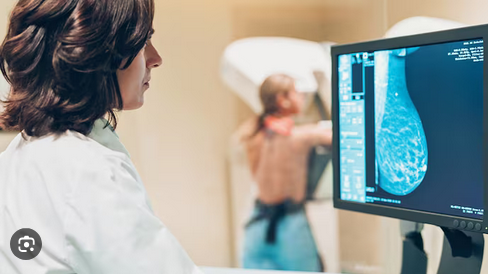
The trial, conducted across Sweden in 2021 and 2022, involved more than 100,000 women undergoing routine mammography.
Participants were randomly divided into two groups. In the intervention group, scans were read by a single radiologist supported by an AI system, while the control group followed standard European practice requiring two radiologists to independently read each scan.
Researchers found that nine percent more cancer cases were detected in the AI-supported group compared with standard screening.
Over a two-year follow-up period, women in the AI group also recorded a 12 percent lower rate of interval cancers, cases diagnosed between routine screenings that are often more aggressive and harder to treat.
The improvement was observed consistently across age groups and breast density levels, both recognised risk factors for breast cancer.

Importantly, the rate of false-positive results remained similar in both groups.
Senior study author Kristina Lang of Lund University said the findings demonstrated the powerful potential of AI Breast Cancer Screening to improve early detection while easing mounting workload pressures on radiologists.

“Widely rolling out AI-supported mammography in breast cancer screening programmes could help reduce workload pressures amongst radiologists, as well as helping to detect more cancers at an early stage,” Ms Lang said. She cautioned, however, that implementation must be gradual and subject to continuous monitoring.
Experts outside the study urged caution alongside optimism. Jean-Philippe Masson, head of the French National Federation of Radiologists, said AI should support, not replace, clinical judgement.
“The radiologist’s eye and experience must correct the AI’s diagnosis,” Mr Masson said, warning that AI systems can sometimes flag benign tissue changes as cancer.
He added that adoption in France remains limited due to high costs and concerns over overdiagnosis.
Stephen Duffy, emeritus professor of cancer screening at Queen Mary University of London, said the study provided further reassurance that AI-assisted screening is safe.
However, he noted that the reduction in interval cancers was not statistically definitive and called for longer follow-up to determine whether detection rates eventually equalise between the two groups.
Interim findings from the trial, published in 2023, showed that AI nearly halved the time radiologists spent reading scans.
The AI model used, known as Transpara, was trained on more than 200,000 mammograms collected from 10 countries.
Breast cancer remains the most common cancer among women globally.
Also read: Sky B claims he joined Illuminati at peak of music career
The World Health Organisation estimates that more than 2.3 million women were diagnosed with the disease in 2022, with about 670,000 deaths recorded worldwide.