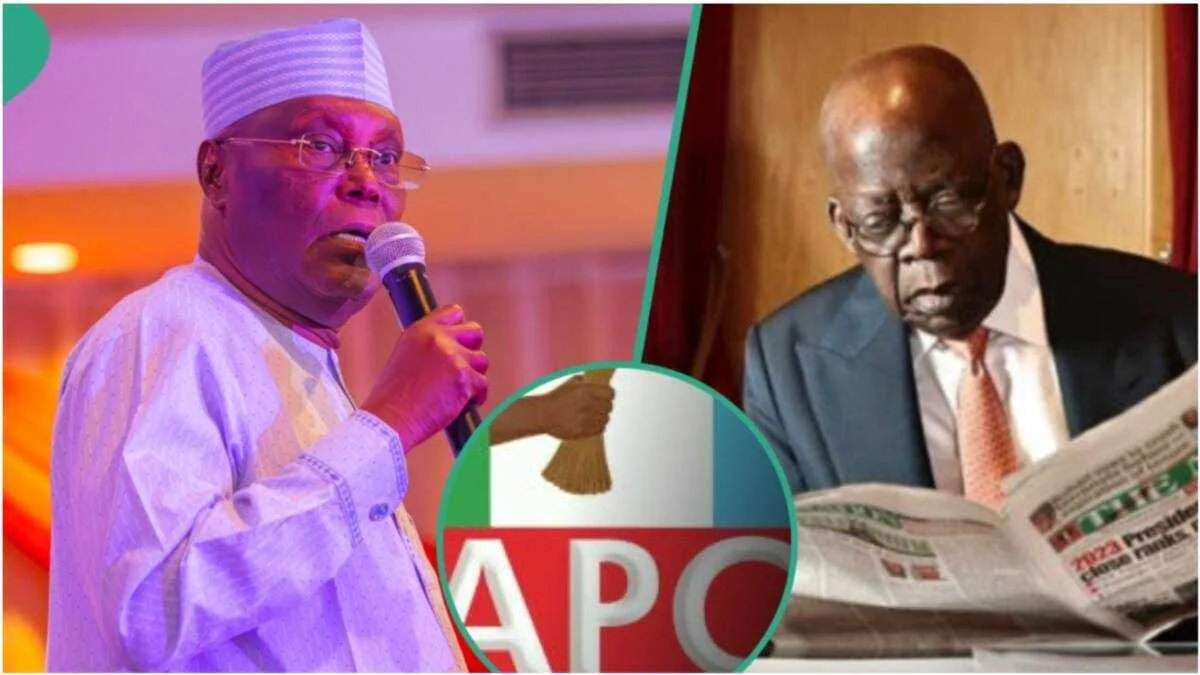

Former Vice-President Atiku Abubakar has challenged President Bola Tinubu to explain Nigeria’s ₦1.44 trillion decline in gross oil revenue in the first half of 2026, despite a sharp rise in international crude oil prices.
Atiku, in a statement issued on Wednesday by his Director of Strategic Communication, Phrank Shaibu, said Nigerians deserved a detailed account of the country’s oil production, sales and revenue collection.
Figures contained in the Budget Office of the Federation’s Second Quarter and Half-Year 2026 Budget Implementation Report showed that the Federal Government generated ₦7.88 trillion in gross oil revenue between January and June, against a target of ₦18.65 trillion.
The amount represented just 42.22 per cent of the projected revenue, leaving a shortfall of ₦10.78 trillion.
The report also showed that gross oil revenue declined from approximately ₦9.32 trillion recorded during the corresponding period in 2025, representing a year-on-year drop of ₦1.44 trillion, or 15.45 per cent.

The decline occurred despite international crude oil prices averaging $104.52 per barrel in the second quarter of 2026, compared with $74 per barrel in the corresponding period of the previous year.
Atiku said the figures raised questions about the management of Nigeria’s oil resources, particularly the gap between the country’s expected earnings and the amount actually collected.
He called on the Federal Government to publish detailed information on crude oil production, volumes lifted and sold, sales proceeds, deductions and the amounts remitted to the Federation Account.
The former vice-president also demanded an explanation of the measures being taken to tackle crude oil theft, pipeline insecurity and inadequate investment in the petroleum sector.
According to him, Nigerians should not be left without answers while continuing to bear the impact of high petrol prices and rising living costs.
The Budget Office attributed the weak oil revenue performance to production constraints, lower oil production and lifting, limited investment in the sector, weak sales receipts and high fiscal deductions under the Petroleum Industry Act.
Nigeria’s average crude oil production stood at 1.72 million barrels per day in the second quarter, below the 1.84 million barrels per day benchmark used in the 2026 budget.

Atiku argued that the government must account for the difference between projected and actual revenue, saying every shortfall reduces the resources available for public services and infrastructure.
He said the administration owed Nigerians an explanation that traced oil earnings from production and sales to the public accounts.
The former vice-president also restated his proposed Make Nigeria Affordable Again agenda, which he said would prioritise accountable oil revenue management and targeted relief for households, farmers, transporters and businesses.

AbdulBasit Saba is a journalist and contributor to Freelanews.com, covering news, business, and public affairs.