
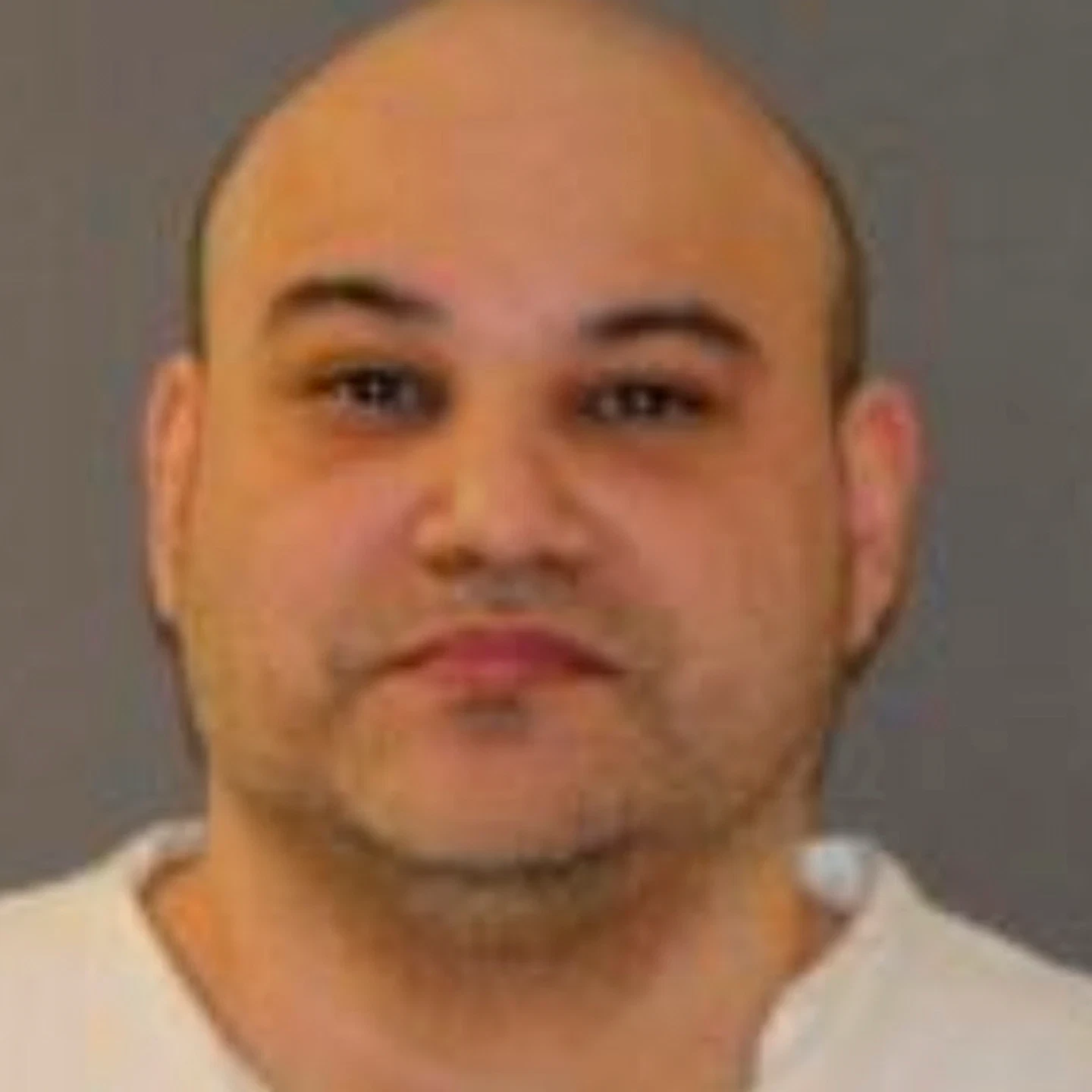

A 46-year-old Texas man, John Allen Rubio, has been executed for the 2003 murders of his three young children, more than two decades after the killings shocked the community of Brownsville.
Rubio was pronounced dead at 6:47 p.m. on Thursday, November 12, following a lethal injection at the state prison in Huntsville, Texas.
Moments before his execution, he told witnesses that he was ready to reunite with the children in heaven.
“I’m going to be with my kids in a little bit. I’m ready to go to heaven to be with my Lord and Saviour,” he said.
He also apologised to his wife’s family, acknowledging that his execution would not undo the suffering caused by the killings.

“I can’t change the past, but I can tell you my life is going to be over. But that’s not going to make you happy,” he said.
Rubio was convicted of killing three children: three-year-old Julissa Quesada, 14-month-old John E. Rubio and two-month-old Mary Jane Rubio.
Their bodies were discovered in March 2003 inside the family’s apartment in Brownsville, a city along the United States-Mexico border. The children had been fatally stabbed and beheaded.
Although Rubio was the biological father of Mary Jane, he raised the two older children as his own.
The case attracted widespread attention because of the circumstances surrounding the killings and the explanations offered by Rubio and his common-law wife, Angela Camacho.
During the investigation, Rubio reportedly claimed that he believed the children were possessed. He also made statements suggesting that he believed Julissa was connected to his deceased grandmother.
Camacho gave different explanations for the killings, including financial difficulties and their belief that the children were possessed.
Rubio’s initial conviction and death sentence were overturned in 2007 after an appeals court ruled that statements made by Camacho had been improperly admitted as evidence during his trial.
However, following a retrial in 2010, he was convicted again of capital murder and sentenced to death.

During the second trial, Rubio pleaded not guilty by reason of insanity. Defence experts diagnosed him with paranoid schizophrenia, while prosecution experts disputed the diagnosis.
Camacho, who was also implicated in the killings, pleaded guilty to three counts of capital murder in 2005 and received a life sentence. She remains in prison for her role in the deaths.
The apartment where the children were killed was later demolished, and the site was transformed into a park and community garden.
Rubio’s execution brings to an end a case that remained in the US criminal justice system for more than 23 years, following the deaths of the three children in March 2003.

AbdulBasit Saba is a journalist and contributor to Freelanews.com, covering news, business, and public affairs.