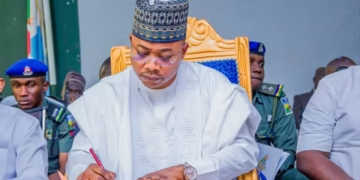
Nigeria Rugby Football Federation President Ademola Are, World Rugby East and Southern Africa Game Growth Manager Robert Bwari, and World Rugby-certified instructor Wuraola Hussain gathered in Abuja on as Nigeria recorded a significant breakthrough by producing its first cohort of local World Rugby educators.
The development marks a decisive shift in the country’s rugby structure, enabling Nigerian experts to lead coaching and refereeing programmes that were previously dependent on foreign instructors.
Also read: Yamal confident of 2026 Ballon d’Or success
The Nigeria World Rugby educators initiative is expected to deepen technical knowledge across the sport and expand its reach at grassroots and elite levels.
Robert Bwari acknowledged the progress made in recent years, describing it as a pivotal moment for the game’s growth in the country.
“I am happy about the level Nigeria has reached in the past years. Now Nigeria has World Rugby educators who can train coaches and referees locally,” Robert Bwari said.
The three-day programme in Abuja drew around 80 participants and covered key areas including coaching, match officiating, first aid in rugby and safeguarding.

The training not only certified local educators but also created a pipeline for sustained knowledge transfer within Nigeria’s rugby ecosystem.
Ademola Are urged participants to carry the impact of the programme beyond the training environment and into their communities.
“Go back and impact your communities because rugby needs you. Without you, rugby cannot make headway,” Ademola Are said.
Wuraola Hussain highlighted the broader significance of the initiative, noting that it would provide a strong technical foundation for the sport’s future.
The newly trained educators are expected to replicate similar programmes across states, strengthening structures that support both youth development and competitive performance.
The Nigeria World Rugby educators milestone builds on earlier efforts by the federation, including grassroots development courses in Ogun State and partnerships aimed at widening participation.
Those initiatives have gradually positioned rugby as an emerging sport within Nigeria’s diverse sporting landscape.
While rugby remains less prominent than football and athletics in Nigeria, consistent investment in technical education signals a long-term strategy focused on sustainability and competitiveness.


Analysts note that developing local expertise often proves more effective than relying on external support, particularly in nurturing talent and maintaining continuity.
Also read: Yamal confident of 2026 Ballon d’Or success
As the federation continues to expand its programmes, the emergence of homegrown educators represents a powerful step towards self-sufficiency and a more resilient rugby structure in Nigeria.

Quadri Olaitan is a journalist and contributor to Freelanews.com, covering news, public affairs, and human-interest stories.