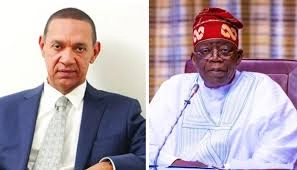
The CCB offshore assets investigation targets seven Nigerians named in the Panama Papers and Pandora Papers over alleged undeclared holdings and business interests.
Nigeria’s Code of Conduct Bureau (CCB) has opened investigations into former Anambra State Governor Peter Obi, former Senate Presidents Bukola Saraki and David Mark, former Aviation Minister Stella Oduah, late former Bayelsa State Governor Diepreye Alamieyeseigha, former Delta State Governor James Ibori, and retired Delta State judicial officer Stella Ogene over allegations of undeclared offshore assets and business interests, PREMIUM TIMES reported on Monday, 26 October 2026.
The investigations follow renewed scrutiny of findings from the Panama Papers and Pandora Papers, two landmark international journalistic investigations that exposed offshore financial arrangements involving politicians, businesspeople and other prominent individuals around the world.
Also read:Lagos urges consumers to report online sellers over wrong items
Multiple sources within the bureau confirmed to PREMIUM TIMES that seven individuals had been assigned to case officers who had begun examining the allegations.
The development marks a significant step in a process that has attracted renewed attention after years of limited public information about the status of the inquiries.
“All the Nigerian officials named in the Panama and Pandora papers will be investigated.

But seven of them have been assigned to case officers who have already commenced investigations,” one CCB source told the newspaper.
An aide to the bureau’s chairman also confirmed that investigations were under way.
The agency has not publicly disclosed the detailed scope of the individual inquiries, and no findings of guilt have been announced in connection with the latest investigations.
The development follows correspondence between PREMIUM TIMES and the CCB dating back to 2021, when the bureau first expressed interest in examining allegations arising from the Pandora Papers investigation coordinated by the International Consortium of Investigative Journalists (ICIJ).
In a letter to the newspaper in October 2021, the bureau acknowledged the significance of the international investigation and sought assistance in obtaining information that could support inquiries and possible prosecutions.
PREMIUM TIMES Editor-in-Chief Musikilu Mojeed welcomed the request and pledged the newspaper’s cooperation, describing the purpose of investigative journalism as helping citizens obtain information and enabling law enforcement agencies to pursue credible leads.
However, several years passed without a detailed public account of the progress made in a number of the cases.
In July 2026, the newspaper again wrote to the bureau, asking for an update on its handling of allegations concerning undeclared assets, foreign bank accounts and business interests held while individuals occupied public office.
In September, the CCB said relevant information and materials were being reviewed under its constitutional and statutory mandate.
The bureau indicated that any necessary action would follow due process, while declining to disclose details that might compromise ongoing or contemplated investigations.
The latest confirmation suggests that the review has progressed to case-level inquiries involving seven individuals, although it remains unclear when the investigations will be concluded or whether any of the cases will ultimately be referred to the Code of Conduct Tribunal.
The legal questions at the centre of the inquiries concern the obligations of public officers to declare their assets and liabilities and comply with restrictions on certain financial and business activities.
Nigeria’s Constitution requires covered public officers to submit declarations of their properties, assets and liabilities when they assume office, periodically during their tenure and at the end of their service.
The Code of Conduct framework also contains restrictions on foreign bank accounts for specified categories of public officers and prohibits certain conflicts between private interests and official responsibilities.
The existence of an offshore company, however, does not by itself establish wrongdoing.
Such companies can be used for legitimate commercial and investment purposes.
The central questions for investigators are whether the individuals concerned complied with the applicable disclosure requirements and whether any prohibited activities occurred while they held public office.
Among the cases attracting renewed attention is that of Peter Obi, who governed Anambra State from 2006 to 2014, with a break in his tenure following a court ruling.
The 2021 Pandora Papers investigation reported that Obi remained a director of NEXT International (UK) Limited for 14 months after becoming governor.
It also raised questions about the declaration of certain offshore interests and the operation of a foreign bank account during his time in office.
Obi did not deny the reported non-compliance with asset declaration requirements, the foreign account or the directorship.
He said he had not realised that jointly owned assets were required to be declared. He has also repeatedly denied diverting public funds, an allegation that was not made in the original PREMIUM TIMES report.
The current investigation will need to establish whether the available evidence supports any breach of the applicable rules and what action, if any, is warranted.
Former Aviation Minister Stella Oduah was also named in the Pandora Papers investigation.
PREMIUM TIMES reported that four London properties, with a combined value of £6.7 million, were acquired between October 2012 and August 2013 through an offshore company incorporated in Seychelles and linked to her.
The investigation also associated Oduah with three other London properties, bringing the total number identified in the report to seven.
Documents reviewed by the newspaper linked her to International Trading and Logistics Company Limited, which was used to acquire the properties.
The records also raised questions about her directorship in the company while serving as a public officer.
These allegations remain distinct from any final determination by the CCB or a competent tribunal.

The inquiry involving Stella Ogene, a retired senior judicial officer who headed the Delta State Customary Court of Appeal for 21 years, stems from findings about an offshore company incorporated in Seychelles in September 2009.
Documents obtained by PREMIUM TIMES identified Ogene as the beneficial owner, director and secretary of Assete Media Limited, which was established to acquire a London property.
The investigation also examined her links to a private Nigerian company during her tenure in the judiciary.
The Panama Papers, published in 2016, form another major strand of the CCB’s work.
Based on leaked records from Panamanian law firm Mossack Fonseca, the investigation exposed offshore corporate structures associated with individuals and businesses across the world.
In Nigeria, the reporting identified offshore interests connected to Bukola Saraki, David Mark and other prominent figures.
The findings raised questions about asset declarations and the restrictions governing the management of private businesses by public officers.
The investigation into Saraki examined offshore assets associated with his family, including interests held by his wife, Toyin Saraki. PREMIUM TIMES reported that several assets were held through offshore structures that had not been disclosed to the CCB as required under its interpretation of the applicable rules.
Documents cited by the newspaper linked Toyin Saraki to Sandon Development Limited, a Seychelles-registered company used to acquire a property in London’s Belgravia district in 2012.
The investigation also examined other offshore companies and transactions involving interests associated with the Saraki family.
For David Mark, the Panama Papers linked the former Senate president to at least eight companies registered in the British Virgin Islands while he held public office.
Records from Mossack Fonseca classified Mark as a politically exposed person and documented the provision of identification materials to the law firm.
The original investigation did not establish the nature of the businesses conducted through those companies. That distinction is important because the presence of a name in offshore corporate records does not, without further evidence, establish that a criminal offence or breach of public service rules occurred.
The CCB is also investigating matters linked to the late Diepreye Alamieyeseigha, who governed Bayelsa State from 1999 until his impeachment in 2005.
The Panama Papers investigation traced offshore companies and overseas assets associated with the former governor.
One company identified in the reporting was Solomon & Peters Limited, incorporated in the British Virgin Islands in 1999.
Documents showed that Alamieyeseigha was appointed its first director and secretary.
The case has a separate and well-documented history. British authorities returned more than £5 million in recovered funds to the Bayelsa State Government in 2012.
The Panama Papers investigation subsequently examined the scale of overseas assets and financial arrangements associated with the former governor.
Former Delta State Governor James Ibori is the seventh person named in the latest CCB investigation.
His inclusion places the inquiry within a broader history of scrutiny of offshore financial arrangements associated with former Nigerian public officials.
The bureau has indicated that its investigations may extend beyond the seven individuals already assigned to case officers to cover other Nigerians named in the international investigations.

The ICIJ’s Pandora Papers project drew on a large collection of confidential records from 14 offshore service providers and involved journalists from media organisations around the world.
Its findings prompted investigations and renewed debate about financial secrecy, public accountability and the use of offshore structures by wealthy individuals and public officials.
For Nigeria, the significance of the CCB’s latest move will ultimately depend on the quality of the evidence gathered, the consistency of the investigations and the transparency of any decisions reached within the limits of due process.
The bureau has the authority to investigate alleged breaches of the Code of Conduct and may refer cases to the Code of Conduct Tribunal where the evidence warrants further proceedings.
Any sanctions, however, must follow the relevant legal process rather than the mere appearance of an individual in leaked documents.
For the seven individuals named, the investigations represent a renewed examination of questions raised by international reporting several years ago.
Also read:Lagos urges consumers to report online sellers over wrong items
For the public, the key test will be whether the inquiries produce clear findings and demonstrate that asset declaration requirements are applied consistently, regardless of an individual’s political position or public profile.

Peculiar Adirika is a journalist and contributor to Freelanews.com, covering news, business, and public affairs.