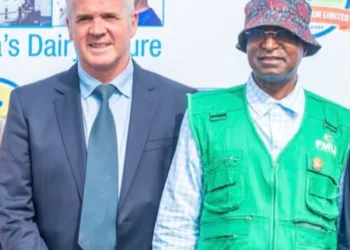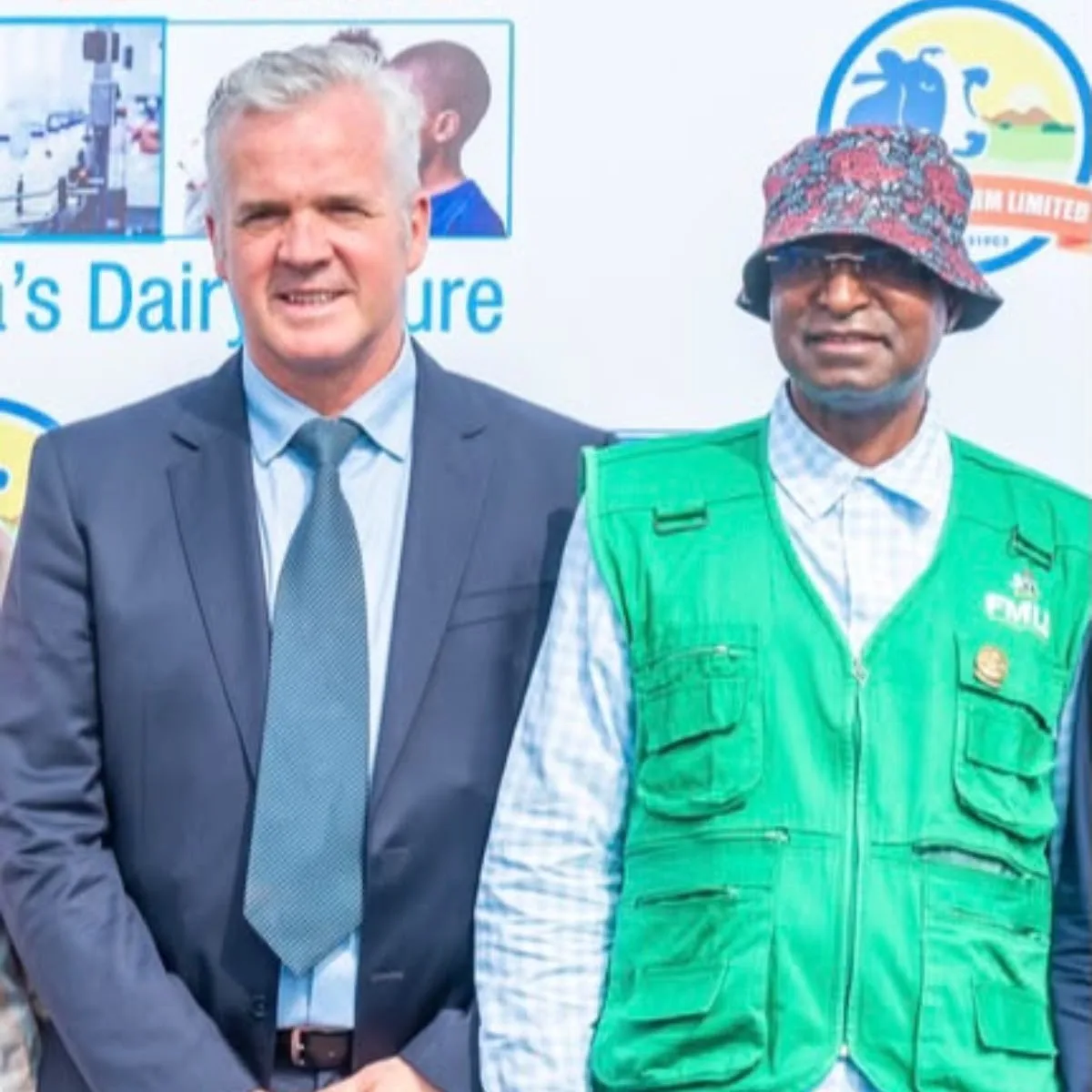

Nigeria’s efforts to strengthen local dairy production received fresh encouragement in Ikun-Ekiti, Ekiti State, on Wednesday, November 4, 2026, as the Minister of Livestock Development, Idi Mukhtar Maiha, commended Promasidor Nigeria Limited and the Ekiti State Government for their investment in Ikun Dairy Farm, a growing agricultural facility producing more than 6,000 litres of fresh milk daily.
The minister’s visit brought renewed attention to the role of private investment and government collaboration in addressing Nigeria’s dependence on imported dairy products, while highlighting the progress made in local cattle breeding, animal healthcare and agricultural development.
Also read: Rivers APC alleges attack on supporters during Tinubu’s visit
During the visit, Maiha acknowledged the facility’s contribution to the Federal Government’s livestock development agenda, particularly its efforts to improve domestic milk production and strengthen the country’s capacity to support a more sustainable dairy industry.
Nigeria spends approximately US$1.5 billion annually on dairy imports, according to figures cited by the Federal Ministry of Livestock Development.
The substantial import bill underscores the economic importance of developing local production capacity and reducing exposure to international supply disruptions.
In a July 2026 statement outlining the government’s dairy development priorities, Maiha said: “Our objective is not simply to import cattle.

Our objective is to build a sustainable dairy industry that improves local productivity, strengthens our genetics, creates jobs, empowers livestock farmers and substantially reduces the nation’s dependence on imported dairy products.”
At the centre of the investment is Ikun Dairy Farm, located in Moba Local Government Area of Ekiti State.
Originally established in 1983, the facility remained underutilised for several years before Promasidor and the Ekiti State Government formalised a partnership in July 2019 to revive its operations.
The partnership attracted an initial investment of US$5 million from Promasidor, which supported the acquisition of cattle, improvements to farm infrastructure, the provision of modern equipment and the development of feed production.
Today, the farm covers more than 500 hectares, accommodates over 700 cattle and produces more than 6,000 litres of fresh milk daily, according to its management.
Beyond milk production, one of the project’s most significant developments has been the gradual expansion of local cattle-breeding capacity.
Promasidor’s Group Finance Director and Chairman of the Board of Ikun Dairy Farm Limited, Yomi Adexson, disclosed that the facility had sold more than 160 pregnant heifers to farmers in 2026.
The initiative is intended to improve access to dairy cattle and extend the benefits of the investment beyond the farm.
Adexson also acknowledged the difficulties encountered during the project’s early stages, including the loss of approximately 185 imported cattle because of challenges adapting to Nigeria’s environmental conditions.
The experience has informed a more sustained approach to breeding and animal management, with successive generations of cattle being developed to better withstand local conditions.
The farm has also expanded its agricultural activities to support feed production, including the cultivation of maize, soybean and cassava.
Investments in veterinary services and improved animal management are further intended to strengthen herd health and productivity.
Promasidor Nigeria Chief Executive Officer, Francois Gillet, emphasised the importance of patience, technical expertise and sustained collaboration in developing a viable domestic dairy industry.
He identified local breeding capacity, farmer development and adaptation to environmental conditions as important foundations for improving productivity and building a more resilient agricultural value chain.
Representing the Ekiti State Governor during the minister’s visit, the Chief of Staff, Oyeniyi Adebayo, reaffirmed the state’s commitment to developing an integrated agricultural economy that connects crop production with livestock development.
He also highlighted the commissioning of a modern veterinary clinic to improve animal healthcare and strengthen disease management within the livestock sector.
The investment’s contribution extends beyond agricultural production.
Ikun Dairy Farm provides more than 200 direct jobs and supports over 1,000 indirect employment opportunities across surrounding communities, according to figures supplied by the company.
Its community engagement efforts also include the weekly Ikun Milk Day programme, through which fresh milk is distributed to primary school pupils in the host community.
The initiative offers a practical connection between the farm’s production activities and community welfare, bringing locally produced milk to schoolchildren while supporting awareness of nutrition and healthy living.
However, the farm’s progress also highlights the scale of the work required to achieve national dairy self-sufficiency.

In February 2021, the Ekiti State Government projected that Ikun Dairy Farm would reach a daily production target of 10,000 litres within 18 to 24 months following the initial investment.
The latest reported output of more than 6,000 litres indicates meaningful progress, although the earlier production target remains higher than current reported levels.
Beyond expanding farm output, Nigeria will need sustained investment in milk collection, processing infrastructure, cold-chain systems, animal genetics and support for smallholder farmers to build a competitive domestic dairy industry.
The Federal Government’s National Dairy Policy 2023–2028 provides a framework for addressing these challenges through improved breeding practices, stronger value-chain infrastructure and greater private-sector participation.
For Promasidor and the Ekiti State Government, the Ikun project represents a long-term commitment to strengthening local agricultural capacity.
Its growing herd, expanding breeding programme and community employment opportunities offer an encouraging example of how strategic investment can support Nigeria’s wider food security ambitions.
Also read: Rivers APC alleges attack on supporters during Tinubu’s visit
As the country continues to pursue dairy self-sufficiency, the experience at Ikun suggests that meaningful progress will depend not only on producing more milk but also on building the infrastructure, expertise and farmer networks needed to sustain production over time.