
Nigeria has completed the 21-day monitoring of all 62 people identified as contacts of its imported Bundibugyo virus disease case, with no secondary infections recorded.
The Nigeria Centre for Disease Control and Prevention (NCDC) announced the development on Friday, November 13, 2026, confirming that the last person under monitoring had completed the follow-up period and was discharged.
The agency’s Director-General, Dr Jide Idris, described the development as an important milestone in the country’s response to the imported case, which was confirmed in the Federal Capital Territory on October 20.
According to the NCDC, 13 of the 62 contacts developed fever or other non-specific symptoms during the monitoring period. However, laboratory tests confirmed that none of them had contracted the virus.
The agency said the outcome reflected the importance of early detection, prompt investigation, contact tracing and cooperation with public health authorities.

The imported case involved a 42-year-old Swiss woman who arrived in Abuja from Uganda via Addis Ababa on October 3. She developed symptoms on October 7 and sought medical attention in Abuja four days later.
Following laboratory confirmation of the infection, the patient and her husband, who was identified as a close contact, were medically evacuated to Switzerland on October 26 for further treatment and isolation.
The patient subsequently recovered, tested negative for the virus and was discharged from hospital in Switzerland.
The confirmation of the case prompted an emergency public health response involving the NCDC, the Federal Ministry of Health and Social Welfare, the Federal Capital Territory authorities and international partners, including the World Health Organisation.
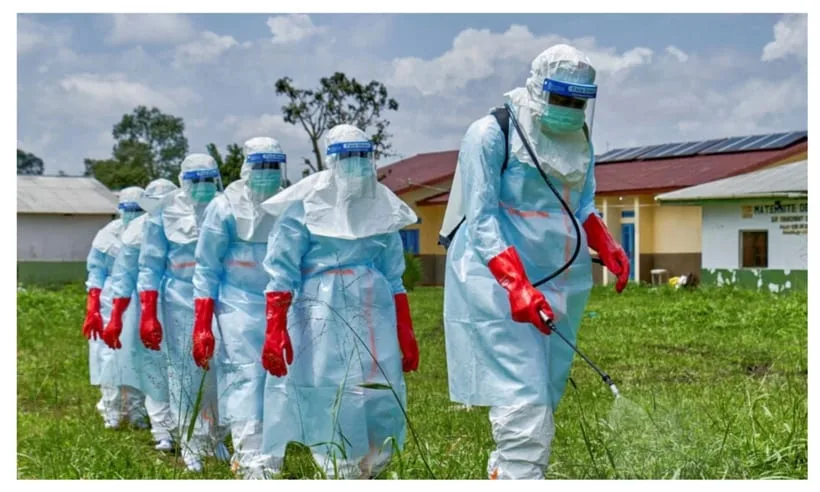
The response included contact identification and monitoring, case investigations, infection prevention and control measures, laboratory testing and the provision of protective equipment for health workers.
The NCDC also disclosed that seven suspected Ebola alerts reported across Adamawa, Rivers, Borno, Lagos and Ekiti states within the three weeks preceding the announcement were investigated, with all testing negative for the virus.
Despite the successful completion of contact monitoring, Idris cautioned against interpreting the development as a formal declaration that Nigeria was free of the disease.
He said the country would maintain heightened surveillance and preparedness, particularly because transmission of the Bundibugyo virus disease was continuing in the Democratic Republic of the Congo.
Under World Health Organisation protocols, a country must complete a 42-day period without a new case after the recovery or departure of its last confirmed patient before the outbreak can be officially declared over.

The WHO had earlier reported that it was working with Nigerian health authorities to strengthen contact tracing, case investigation, infection prevention and control, and the supply of essential protective equipment.
The completion of monitoring for all 62 contacts therefore marks a significant step in Nigeria’s containment efforts, although authorities have stressed that continued vigilance remains necessary.

AbdulBasit Saba is a journalist and contributor to Freelanews.com, covering news, business, and public affairs.