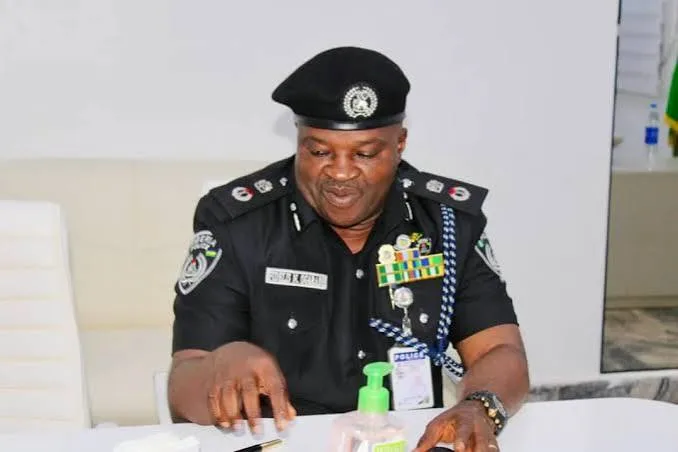

Enugu State Police Command spokesman, Superintendent of Police Daniel Ndukwe, disclosed the new commissioner’s directives in a statement issued on Tuesday, November 17, following Ogarabe’s assumption of office as the 30th Commissioner of Police in the state.
During his maiden address to officers and men at the command headquarters in GRA, Enugu, Ogarabe outlined an administration built around professionalism, intelligence gathering, crime prevention and stronger cooperation between the police and residents.
Also read:Daniel Regha knocks Enioluwa over apology for ‘Lazy Youths’ remarks
One of his most immediate directives was the requirement for officers to report political and election-related incidents to him within three hours of their occurrence.
The instruction comes as political activities gradually intensify ahead of the 2027 general elections, placing additional responsibility on security agencies to prevent violence, protect citizens and maintain neutrality during the electoral process.
Ogarabe urged officers to take personal responsibility for security within their respective jurisdictions rather than wait for incidents to escalate before responding.
He also emphasised the importance of intelligence-led operations, visible policing, effective investigations and decisive action against violent crimes.

However, the new commissioner made it clear that improving public security must go hand in hand with addressing misconduct within the police force.
He specifically warned officers against political partisanship, corruption, extortion, abuse of authority and other forms of unprofessional behaviour.
He directed personnel to respect citizens’ fundamental rights, constituted authorities and traditional institutions while complying with the law and valid court orders.
In a significant move towards strengthening internal accountability, Ogarabe ordered the reinvigoration of the command’s X-Squad and other disciplinary units responsible for monitoring police conduct and investigating allegations of misconduct.
He declared zero tolerance for extortion and corruption, signalling that officers who exploit their positions for personal gain would face disciplinary attention.
The emphasis on police accountability is particularly important in the context of longstanding public concerns about extortion, unlawful detention and abuse of authority by some security personnel.
The commissioner also identified personnel welfare as one of his priorities, recognising that the effectiveness of policing depends partly on the working conditions, discipline and professional capacity of officers.
Ogarabe’s appointment was approved by the Police Service Commission on November 6, 2026, alongside the deployment of three other commissioners to Plateau, Nasarawa and Ondo states.
The commission said the appointments followed interviews designed to assess the officers’ suitability and fitness for their new responsibilities. Its chairman, Deputy Inspector-General of Police Hashimu Salihu Argungu, urged the newly deployed commissioners to demonstrate impartiality and uphold the expectations of their offices.
Ogarabe succeeds Commissioner of Police Mamman Bitrus Giwa, who has been redeployed to the Force Criminal Investigation Department in Abuja to head the Special Enquiry Bureau.
The new Enugu police chief brings more than three decades of experience to the position, having joined the Nigeria Police Force as a Cadet Assistant Superintendent of Police and received his commission in 1994.
His career began in Enugu State, where he served in different divisions, including as Divisional Police Officer of the then Trade Fair Police Station.
He subsequently worked in the General Investigation Department of the State Criminal Investigation Department in Abia State before returning to Enugu.
Between 2007 and 2023, he served as Chief Security Officer to two successive governors of Enugu State, gaining experience in executive protection and government security operations.
His subsequent assignments included positions as Assistant Commissioner of Police and Deputy Commissioner of Police in charge of the Enugu Command’s Criminal Investigation Department.
He also served at the Force CID Annex in Enugu and as Deputy Commissioner of Police in charge of Finance and Administration in Anambra State.
After his promotion to Commissioner of Police, Ogarabe served at the Office of the National Security Adviser in Abuja and later became Commissioner of Police in charge of the Independent National Electoral Commission.

Before his latest deployment, he headed the INTERPOL Annex in Lagos, a posting that added international police cooperation to his professional experience.
Academically, Ogarabe holds a bachelor’s degree in Political Science from the University of Nigeria, Nsukka, and a master’s degree in International Law and Diplomacy from Enugu State University of Science and Technology.
He is also a professional member of the National Institute of Police Studies and has attended several specialised programmes, including the Institute’s Strategic Leadership and Command Course, the Chief Security Officers’ Course, Junior Command Course and Advanced Detective Course.
Addressing residents, the commissioner pledged to deliver impartial and people-oriented policing while seeking stronger cooperation from community leaders, traditional institutions and other stakeholders.
He also promised to align the command’s security strategy with the vision of the Inspector-General of Police, Olatunji Rilwan Disu.
His assumption of office comes at a time when public confidence, community intelligence and effective crime prevention remain important considerations for policing across Nigeria.
For residents of Enugu, the immediate test will be whether the new administration can translate its promises into measurable improvements in security, police responsiveness and accountability.
Also read:Daniel Regha knocks Enioluwa over apology for ‘Lazy Youths’ remarks
While Ogarabe’s directives establish a firm starting point, the success of his leadership will ultimately depend on consistent implementation, fair treatment of citizens and the willingness of the command to hold erring personnel accountable.

Mariam Balogun is a contributor to Freelanews.com, covering news, business, and public affairs.