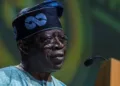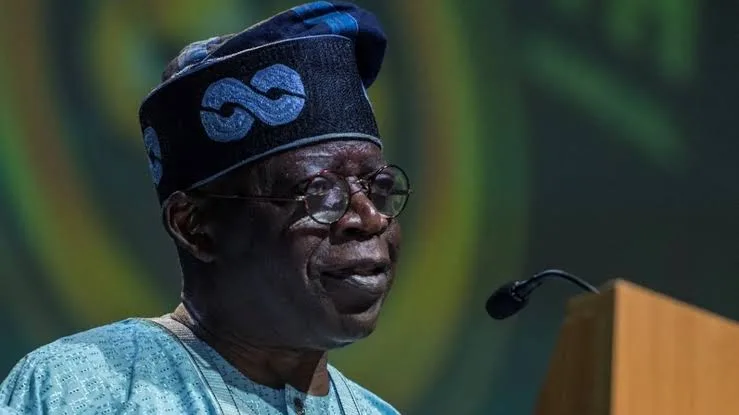

President Bola Tinubu has disclosed that Nigeria’s presidential villa, Aso Rock, in Abuja, experiences electricity and water supply disruptions, acknowledging infrastructure challenges that affect millions of ordinary Nigerians.
Tinubu made the disclosure on Sunday, November 22, 2026, during a special prayer session organised in his honour by members of his family in Lagos.
Also read: Infantino: Nigeria not ready for world cup
Recounting an incident from the previous week, the president said the water supply stopped while he was shaving at the presidential villa, popularly known as Aso Villa.
He used the experience to acknowledge that the country’s infrastructure problems also affect the seat of government, while promising that his administration would work to address them.
“On the Wednesday of last week, I was shaving, and the water went off. In the villa, you won’t know punishment dey dia too,” he said, using a Nigerian Pidgin expression to suggest that difficulties also occur within the presidential residence.
“The water went off. So we will correct all this. No light, no water, no electricity, no development. We have just started. We can do it, and we will do it for Nigeria,” he added.

Aso Villa serves as both the official residence and workplace of Nigeria’s president. The complex is located at the base of Aso Rock in Abuja.
The disclosure comes amid persistent concerns about unreliable electricity and inadequate public water infrastructure across the country.
In 2025, N10bn was allocated in the national budget for the installation of a solar mini-grid at Aso Villa. The project was intended to reduce electricity costs and provide a more dependable power supply.
Some reports have indicated that the installation has been completed and entered the testing phase, with plans to eventually disconnect the presidential complex from the national grid.
However, the latest disclosure of power and water interruptions raises questions about the reliability of services at the facility.
Nigeria has struggled with electricity shortages for years.
Recent disruptions have been linked largely to inadequate gas supplies and declining hydropower output, alongside persistent weaknesses in the country’s electricity infrastructure.
Power cuts in major cities, including Lagos and Abuja, have forced electricity distribution companies to introduce rotating supply schedules, disrupting households, commercial activities and industrial operations.
Water supply is another major challenge. Rapid urbanisation, population growth and ageing or inadequate public infrastructure have left many communities without dependable access to piped water.
Millions of residents, particularly in densely populated urban areas, rely on private boreholes, water vendors and other alternative sources.
Tinubu’s comments also come as he prepares to seek re-election in January 2027, with electricity supply remaining a significant issue in the debate over his administration’s performance.
During the 2023 presidential campaign, he made a high-profile promise to improve electricity access and end estimated billing for consumers.
In 2022, he told supporters: “Whichever way, by all means necessary, you will have electricity, and you will not pay for estimated bills any more. A promise made will be a promise kept.”
He also challenged voters to hold him accountable if he failed to deliver on the commitment.
“If I don’t keep the promise and I come for a second term, don’t vote for me, unless I give you adequate reasons why I couldn’t deliver,” he said.
Despite continuing electricity challenges, supporters of the president point to improvements in power supply in some rural communities and a recently approved $2bn investment in a proposed East-West Super Grid as evidence of efforts to strengthen the electricity sector.

The planned transmission project is intended to expand the country’s capacity to move electricity across the national grid and improve the reliability of supply.
Tinubu won the 2023 presidential election, defeating former Vice-President Atiku Abubakar and former Anambra State Governor Peter Obi.
Both men are again regarded as prominent potential challengers ahead of the next election.
Also read: Infantino: Nigeria not ready for world cup
With electricity and water shortages continuing to affect households and businesses, the president’s latest remarks have brought renewed attention to the infrastructure problems facing Nigerians and the commitments made by his administration to address them.

Mariam Balogun is a contributor to Freelanews.com, covering news, business, and public affairs.