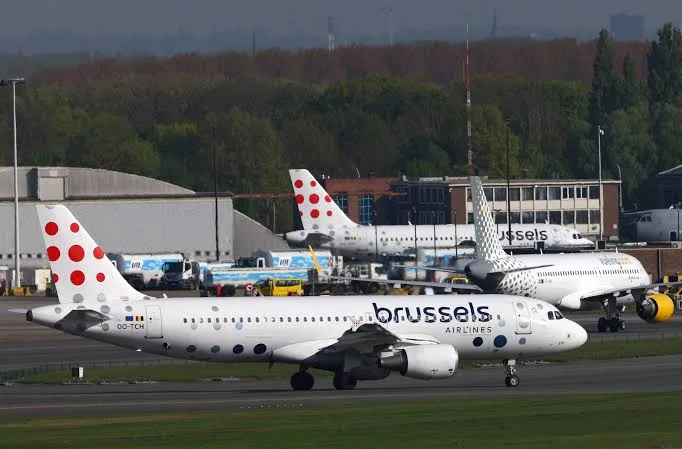

Belgium is facing widespread flight cancellations on Monday as air traffic controllers join a nationwide strike against government austerity measures, with authorities warning that nearly all regular flights will be grounded for much of the day.
Skeyes, the company responsible for managing Belgium’s air traffic, said it would be unable to provide normal services at the country’s airports and within its airspace between 7am and 9pm local time.
Also read: New COVID-19 variant: academy urges Nigerians to stay alert
The company said anticipated staffing levels would not be sufficient to guarantee the safe management of regular air traffic during the 14-hour period.
“The anticipated staffing levels will not allow the safe handling of regular air traffic to be guaranteed during this period,” Skeyes said in a statement. “Skeyes is therefore obliged to temporarily suspend the services concerned.”
It added that essential operations, including emergency and other safety-critical flights, would continue.
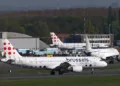
The announcement is expected to affect thousands of passengers travelling through Belgium, including those using Brussels Airport and Brussels South Charleroi Airport, a major European base for low-cost carrier Ryanair.

Brussels South Charleroi Airport warned that the industrial action would lead to the complete shutdown of the country’s airports for the day, describing the announcement as a last-minute decision with serious consequences for travellers.
“Without air traffic control, no flights can take off or land,” the airport said.
Brussels Airport also confirmed that most departing and arriving flights would have to be cancelled, urging passengers to prepare for significant disruption.
The planned walkout is part of a nationwide day of action organised by Belgian trade unions to oppose austerity policies and reforms being pursued by the country’s governing coalition.
The Board of Airline Representatives in Belgium, which represents approximately 25 airlines, said Monday’s action would mark the 11th strike to affect Belgian airspace in 11 months, highlighting the frequency of industrial disputes disrupting the country’s aviation sector.

Beyond aviation, unions are planning a large-scale demonstration in Brussels, while public transport services are also expected to experience significant disruption.
Schools, government offices and refuse collection services may also be affected as workers across different sectors participate in the action.
The protests come as Prime Minister Bart De Wever faces mounting pressure to reach agreement with his coalition partners on a cost-cutting budget aimed at reducing Belgium’s high public deficit.
The government is seeking savings of €10bn, equivalent to approximately $11bn, over the next few years. De Wever has been engaged in prolonged negotiations with coalition partners over the proposed measures.
Earlier in November, the prime minister offered to resign after the coalition failed to reach an agreement. However, King Philippe rejected his resignation and gave him additional time to resolve the dispute.
The planned strike reflects growing opposition among unions to the government’s economic policies, with workers warning against the impact of spending cuts and reforms.
Also read: New COVID-19 variant: academy urges Nigerians to stay alert
For passengers, the immediate consequence is likely to be widespread disruption across Belgium’s aviation network, with only essential and safety-critical flights expected to operate during the suspension of regular air traffic services.

Mariam Balogun is a contributor to Freelanews.com, covering news, business, and public affairs.