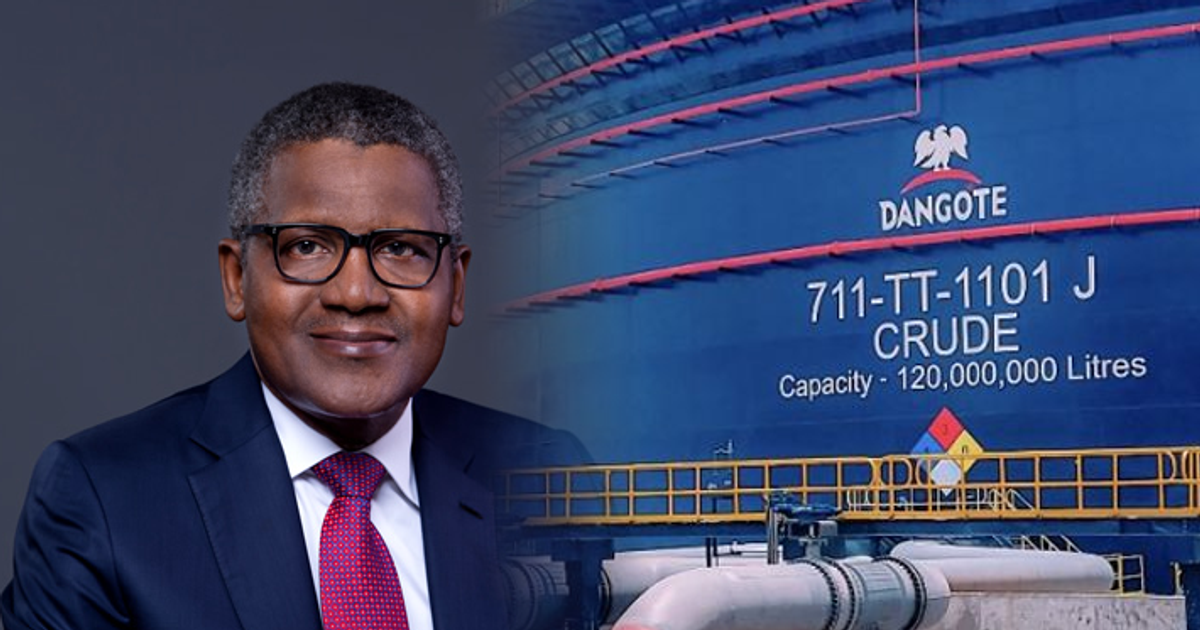

Dangote petrol price cut lowers gantry rates to N1,200 as refinery faces crude supply challenges and global oil pressures.
The Dangote Petroleum Refinery & Petrochemicals has reduced its gantry price for Premium Motor Spirit (petrol) to N1,200 per litre and pegged its coastal price at N1,153 per litre, in a move expected to reshape fuel supply costs across Nigeria’s downstream sector.
Also read: Dangote refinery faces $5.4bn crude shortfall
The adjustment was announced on Thursday by the spokesperson of the Dangote Group, Anthony Chiejina, who said the decision reflects a downward review of the refinery’s pricing structure amid volatility in global oil markets driven by Middle East tensions.
Chiejina noted that the revised pricing is likely to influence distribution costs across depots and retail outlets, offering some relief to marketers sourcing products locally rather than relying on imports.
With the new gantry rate of N1,200 per litre, industry operators are expected to recalibrate landing costs, while the coastal price of N1,153 per litre is projected to support marine deliveries to depots along Nigeria’s southern corridors.

The Dangote petrol price cut follows a period of sustained increases triggered by geopolitical tensions, with pump prices rising from about N840 per litre before the crisis to around N1,300 in recent weeks.
The latest reduction from N1,275 is expected to exert modest downward pressure on retail prices.
Despite the price relief, the refinery continues to grapple with significant crude oil supply constraints.
Data from internal sources indicate that the facility recorded a shortfall of approximately 79.53 million barrels between October 2025 and mid-March 2026, far below the estimated 19.77 million barrels required monthly for optimal operations.
Monthly deliveries fell short throughout the period, with 4.55 million barrels supplied in October, 6.45 million in November, 4.30 million in December, 5.65 million in January, and 4.66 million in February.
Only 3.6 million barrels were delivered between March 1 and 15.

A senior refinery official argued that the situation contradicts provisions of the Petroleum Industry Act, which prioritises domestic supply before export.
The source noted that the $20bn Lekki-based facility has struggled to secure adequate crude volumes while Nigeria continues to export oil.
Further highlighting the strain, Managing Director David Bird recently disclosed that the refinery has been receiving only five cargoes of crude instead of the 13 cargoes agreed under the naira-for-crude arrangement.
Also read: Dangote warns middle east crisis may trigger Africa work-from-home
The development underscores the complex balance between pricing relief and supply sustainability, as the refinery navigates operational pressures while attempting to stabilise Nigeria’s fuel market.