


Ogun State Governor Dapo Abiodun’s honorary doctorate from TASFUED has ignited debate over his role in education reform, the federalisation of TASUED and political rivalries in Ogun State
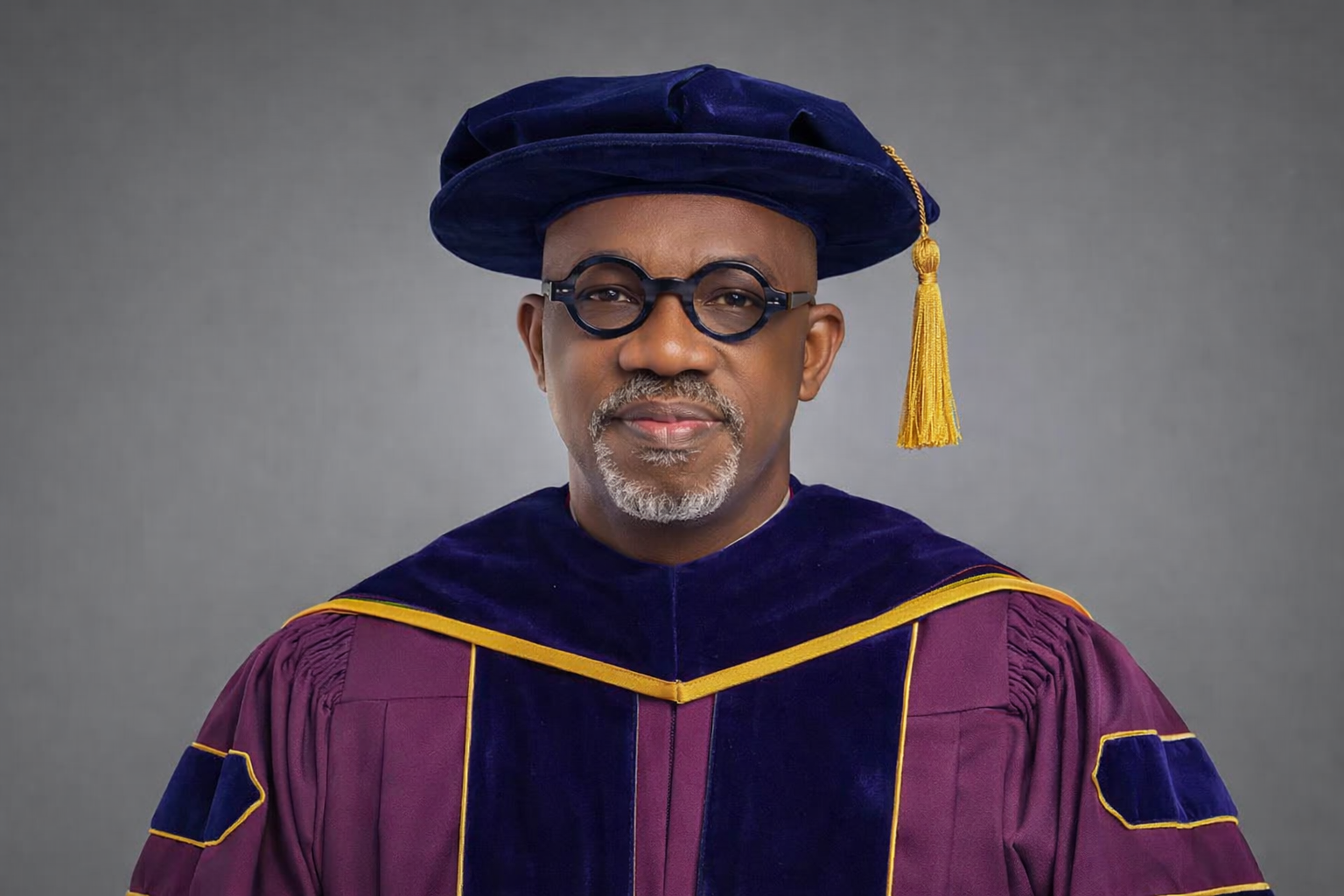
In a ceremony heavy with pageantry and political subtext, Ogun State Governor Prince Dapo Abiodun is set to receive an honorary Doctor of Science (D.Sc., Honoris Causa) in Education Management from Tai Solarin Federal University of Education (TASFUED, formerly TASUED) today, January 29, 2026, during the institution’s 17th convocation.
The award, which he shares with Nigeria’s First Lady, Senator Oluremi Tinubu, and former Ogun State Governor Chief Olusegun Osoba, is officially framed as recognition for “outstanding contributions to society.”
Yet, it has stirred intense debate over Abiodun’s actual record in education and the circumstances surrounding the university’s recent federalisation.
TASFUED’s official account presents Abiodun as a forward-looking leader whose administration “kick-started the process” that led to the university’s transition from a state to a federal institution, a move portrayed as delivering long-term benefits to Ogun State’s education sector.
The university’s Registrar, Dapo Oke, has cited the governor’s “wealth of private and public sector experience” and his strategic interventions in governance and educational development as justification for the honour.
This narrative aligns with the state government’s position, which has described the federal takeover as a deliberate request aimed at achieving fairer distribution of federal universities across Ogun’s senatorial districts, while unlocking improved funding and institutional stability.
Critics, however, have dismissed this portrayal as a distortion of events, accusing the university of retroactively inflating Abiodun’s role to legitimise the award.
Former Ogun State Governor and current Senator, Otunba Gbenga Daniel, sharply challenged the claim in an open letter and a series of public statements in March 2025.
Recall that Tai Solarin University of Education was established in 2005 by the administration of Governor Otunba Gbenga Daniel. It was founded as Nigeria’s first specialised university of education, named after Dr Tai Solarin, the renowned educationist and humanist, and was sited in Ijagun, Ijebu-Ode.
He argued that the federalisation of TASUED was not the result of visionary policy but a rescue intervention prompted by years of underfunding and neglect under Abiodun’s administration.
According to Otunba Daniel, the state government’s failure to adequately finance its tertiary institutions left the Federal Government with little choice but to step in to avert institutional collapse.
He described the development as evidence of misplaced priorities rather than educational foresight.
The dispute quickly escalated into a public political feud.
Otunba Daniel went further to accuse Abiodun of deliberately frustrating federally funded projects in Ogun State, including road rehabilitations and healthcare facilities, allegedly to weaken opposition influence.
While Abiodun’s camp dismissed these claims as politically charged, the controversy deepened scrutiny of the governor’s stewardship of public institutions.
The federal takeover itself was formalised on March 7, 2025, when President Bola Ahmed Tinubu approved TASUED’s adoption as a federal university.
It became the third specialised federal university of education in Nigeria, joining Alvan Ikoku Federal University of Education and Adeyemi Federal University of Education.
The Federal Ministry of Education described the move as a boost to teacher training and national education quality.
Vice-Chancellor Professor Oluwole Banjo publicly praised Abiodun as a “pillar of support” during the transition.
Yet, Otunba Daniel’s supporters countered that the takeover exposed longstanding governance failures, pointing to TASUED’s recurring financial challenges since the OGD administration left office.
Several education stakeholders have echoed these concerns, questioning what concrete investments Abiodun made in tertiary education infrastructure or funding since assuming office in 2019, aside from overseeing the transfer to federal control.
Further complicating the controversy are renewed questions about Abiodun’s academic history, which have resurfaced in the context of the honorary degree.
Reports predating the 2019 governorship election highlighted inconsistencies in his educational records, including discrepancies between documents submitted during his 2015 Senate bid and his 2019 nomination.
Abiodun had listed attendance at the University of Ife, now Obafemi Awolowo University, for Civil Engineering, but later clarified that he never claimed to have earned a degree there.
He subsequently obtained a Bachelor of Business Administration in Accounting from Kennesaw State University in 1986.
Allegations relating to avoidance of the National Youth Service Corps led to legal challenges, though election tribunals ultimately dismissed claims of fraud, ruling them politically motivated.
For critics, however, the issue extends beyond legal clearance.
They argue that honorary degrees, particularly in specialised fields such as Education Management, should reflect demonstrable sectoral impact and unimpeachable ethical standing, standards they say Abiodun does not convincingly meet.
Supporters of the governor maintain that the federalisation of TASFUED was a pragmatic and forward-looking decision that guarantees the institution’s sustainability through improved funding, staff welfare, and research capacity.
Whether the doctorate ultimately strengthens Abiodun’s legacy or reinforces doubts about his administration’s priorities is a debate that is unlikely to end with today’s applause.

Ojelabi, the publisher of Freelanews, is an award winning and professionally trained mass communicator, who writes ruthlessly about pop culture, religion, politics and entertainment.