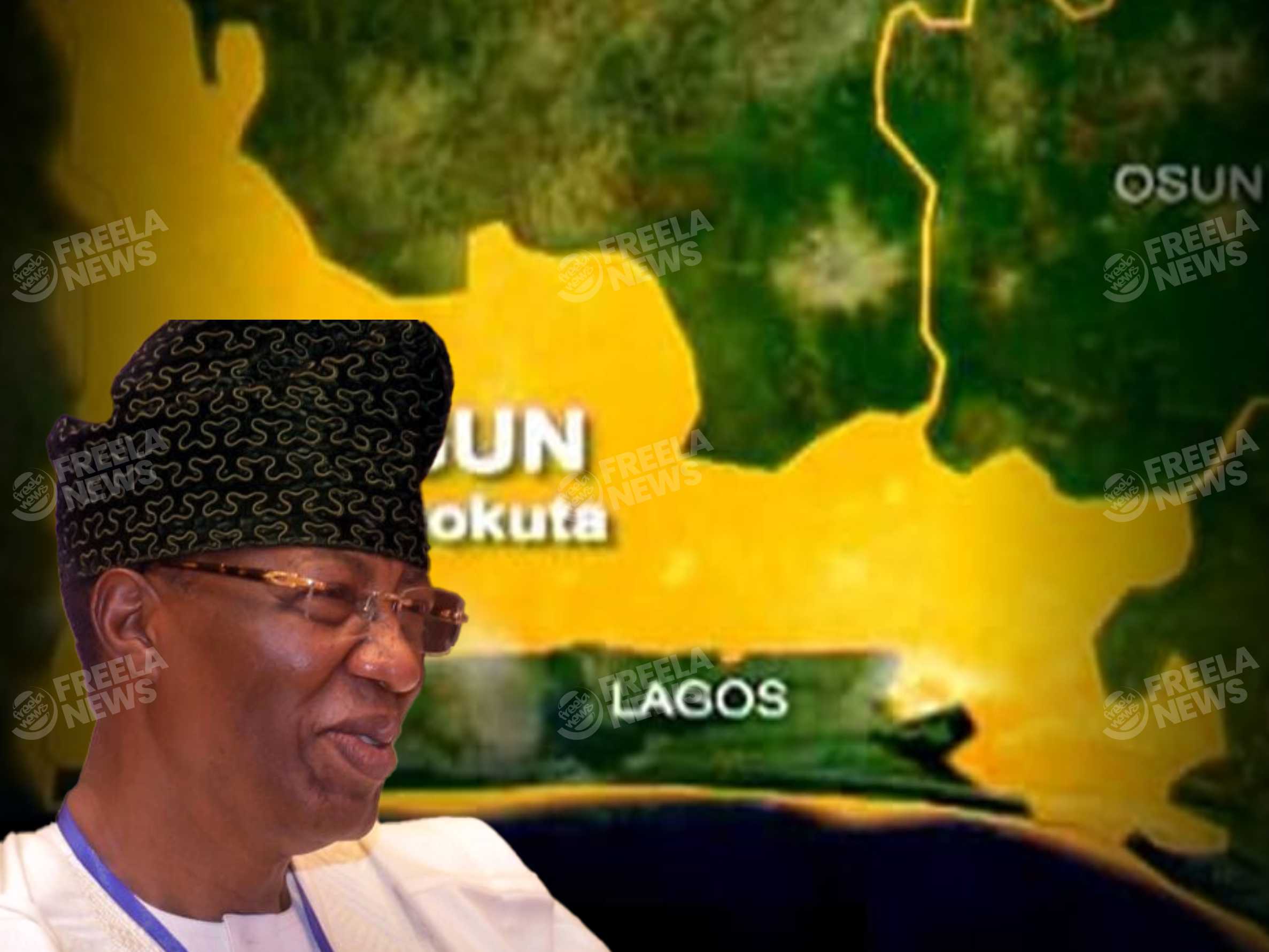


When Otunba Olugbenga Daniel assumed office as Governor of Ogun State in May 2003, sports was far from a priority sector in most state budgets across Nigeria.
Facilities were ageing, athlete welfare was inconsistent and sporting success was largely accidental rather than planned.
By the time he left office in May 2011, Ogun State had become a reference point for how sport, when deliberately integrated into governance, could drive youth mobilisation, economic activity and institutional pride.
Popularly known as OGD, Daniel approached sports not as entertainment but as policy.
He consistently described it as a veritable tool for economic development, and his administration backed that belief with infrastructure, events and measurable outcomes that still shape Ogun State’s sporting ecosystem today.
Infrastructure as a statement of intent
A defining feature of Daniel’s sports agenda was the scale and geographical spread of infrastructure development.
Rather than concentrate facilities in the state capital alone, his government invested across Ogun East, Ogun Central and Ogun West, ensuring access, inclusion and statewide participation.
In Ijebu-Ode, the Gateway International Stadium emerged as the flagship project of this vision.
Built as an ultra-modern facility complete with a games village, the stadium later renamed the Mike Adenuga Jnr International Stadium became one of the most prominent sporting venues in the South West.
Daniel would later describe its construction as one of the most far-reaching decisions of his tenure, noting that it instantly elevated Ogun State’s capacity to host high-profile competitions.
Sagamu also benefited from a major dual investment.
The Gateway International Stadium in the town was developed alongside a purpose-built National Youth Service Corps camp, widely regarded as one of the best in Nigeria.
The integration of sports facilities into the camp reflected a broader philosophy that youth development, physical fitness and national service could reinforce one another.
In Ogun West, the Gateway International Stadium in Ilaro provided long overdue infrastructure for local competitions and training, opening pathways for talent development in a district that had historically lacked major sports facilities.
Abeokuta, in Ogun Central, saw strategic upgrades rather than duplication.
The M.K.O. Abiola Stadium and the Muda Lawal Stadium were modernised to world standards, while the Alake Sports Centre was constructed to support grassroots and community sports.
Collectively, these investments repositioned Ogun State as one of Nigeria’s most infrastructure-ready sporting states within a single decade.
Hosting as economic strategy
Daniel’s administration did not build facilities to lie dormant.
A deliberate hosting strategy ensured that these venues became engines of activity, visibility and income.
The high point came in 2009 when Ogun State hosted matches during the FIFA Under-17 World Cup, with games played at the Gateway International Stadium in Ijebu-Ode.
This placed the state on a global sporting map and validated the quality of its infrastructure in the eyes of international organisers.
At the regional level, Ogun State hosted the West African Football Union Nations Cup, reinforcing its reputation as a credible destination for elite football in West Africa.
Yet the most innovative hosting initiative was the Gateway Games, a state-level multi-sport competition conceived and executed under Daniel’s leadership.
Far from being a routine sports festival, the Gateway Games was designed as a large-scale mobilisation platform for youth empowerment and economic participation.
According to Daniel, several thousands of people converged on Ogun State during the games, creating a ripple effect across communities.
There was hardly any resident who was not engaged in one form or another. Local tailors produced clothing and bedding for athletes and health centres. Transport operators, vendors and artisans all found opportunities linked directly to the event.
In a landmark departure from established practice, Daniel’s government rendered full accounts of expenditure for the Gateway Games and declared a profit of N94 million.
This was the first time a state government in Nigeria publicly reported profits from organising a sporting event till date.
Notably, this financial outcome was achieved alongside the construction of a games village, later known as Makun Village under a succeeding administration.
Performance backed by planning
The impact of this approach was evident in competitive results.
During Daniel’s tenure, Ogun State consistently ranked among the top three sporting states in Nigeria, a significant leap that reflected sustained investment rather than episodic spending.
At the 16th National Sports Festival, KADA 09 in 2009, Team Ogun emerged as the best performing state in the South West and finished third overall nationwide.
The result was widely attributed to structured talent scouting, improved coaching and access to quality facilities, rather than last-minute preparation.
Sports as youth policy and legacy
Beyond medals and tournaments, Daniel deliberately integrated sports into broader youth and economic development strategies.
He saw organised sport as a tool for social engagement, discipline and opportunity creation, particularly for young people.
His contributions were formally recognised after his tenure.
In 2016, he was appointed National Matron of the Sports Writers Association of Nigeria, and in 2021, he was honoured as a Pillar of Sports in Ogun State.
He also consistently challenged wealthy Nigerians to invest in sports, urging them to see it as both a social responsibility and an economic opportunity.
The economics of governance
Perhaps the most striking context for Daniel’s achievements lies in the financial realities of his time in office.
As at the period, Ogun State’s internally generated revenue stood at about N200 million monthly, while federal allocation fluctuated between N600 million and N800 million.
In practical terms, OGD governed with roughly N1 billion monthly.
From this amount, civil servants’ salaries alone consumed between N680 million and N700 million, leaving approximately N250 million for all other responsibilities of government.
Over his eight years in office, the total allocation and internally generated revenue available to Ogun State amounted to about N330 billion.
This context has shaped contemporary reassessments of his tenure.
As Ogun State marks 50 years of creation, Daniel’s performance is increasingly described as that of a magician in government, particularly when contrasted with later administrations operating with significantly larger resources.
By comparison, the current Ogun State government under Prince Dapo Abiodun has an estimated N1.055 trillion at its disposal for the 2025 fiscal year alone with no known new sport facilities added to the existing one since the OGD’s tenure despite its over 7years in office.
Measured against the modest resources he controlled, Otunba Gbenga Daniel’s sports legacy stands as a case study in how vision, discipline and accountability can stretch limited funds into lasting institutions.
His administration demonstrated that sports, when treated as policy rather than pastime, can leave footprints far beyond the stadium.

Ojelabi, the publisher of Freelanews, is an award winning and professionally trained mass communicator, who writes ruthlessly about pop culture, religion, politics and entertainment.