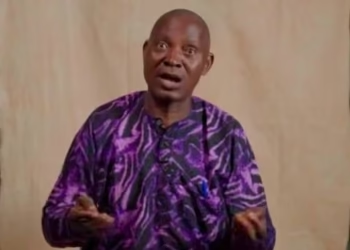


The Minister of Education, Dr Tunji Alausa, has said artificial intelligence and other emerging technologies cannot replace Nigerian teachers, stressing that human judgement, encouragement and personal connection remain central to effective learning.
Alausa made the statement on Monday in Abuja while marking the 2026 World Teachers’ Day and the President’s Teachers’ and Schools’ Excellence Awards.
Speaking on the theme, “Protecting and Advancing the Status of the Teaching Profession in a Rapidly Changing World,” the minister said the growing use of technology was changing how knowledge was accessed and delivered but should complement rather than displace professional teachers.
He said artificial intelligence could help teachers reach more learners and tailor instruction to individual needs, but argued that machines could not provide the professional judgement, encouragement and human connection that skilled teachers bring to the classroom.
“Technology and Artificial Intelligence are changing how knowledge is accessed and used. These tools can help teachers reach learners and tailor instruction, but the judgement, encouragement and human connection of a skilled teacher remain indispensable,” Alausa said.

The minister called for teachers to be equipped with the knowledge and skills required to use emerging technologies responsibly and confidently, while maintaining the professional standards and values of the teaching profession.
He said teachers deserved professional respect, continuous career development, appropriate teaching resources, fair recognition and working conditions that would enable them to perform effectively.
Alausa described teachers as the foundation of every other profession, noting that doctors, engineers, scientists, entrepreneurs and public servants all benefited from the work of educators.
“When we honour teachers, we honour the people who make every other profession possible,” he said.

He said the Federal Government’s education reforms were focused on improving learning environments, strengthening institutions, developing skills for a changing economy, improving the use of education data and enhancing teacher welfare and professional development.

According to the minister, the Federal Government would continue working with state governments and other stakeholders to improve the conditions under which teachers operate.
He also stressed that children’s educational opportunities should not be determined by their location, family income or circumstances, saying teachers in both urban and rural communities needed the tools and institutional support required to help learners succeed.
Alausa called for stronger collaboration among governments, school leaders, professional bodies, organised labour, development partners, communities and parents to improve teacher preparation, development and recognition.
The minister also congratulated recipients of the 2026 President’s Teachers’ and Schools’ Excellence Awards, saying the awards recognised outstanding teachers, school administrators and schools for professionalism, innovation and leadership.
He urged the award recipients to regard their recognition as a responsibility to inspire others and promote higher standards across the education system, while reassuring teachers who were not honoured that their daily contributions remained valuable.
Alausa further urged teachers nationwide to renew their commitment to service, professionalism and patriotism, stressing that appreciation of educators should go beyond an annual celebration.
“Your service calls for more than words of thanks on one day each year. It calls for sustained respect, investment and partnership through each day of the year,” he said.
AbdulBasit Saba is a journalist and contributor to Freelanews.com, covering news, business, and public affairs.