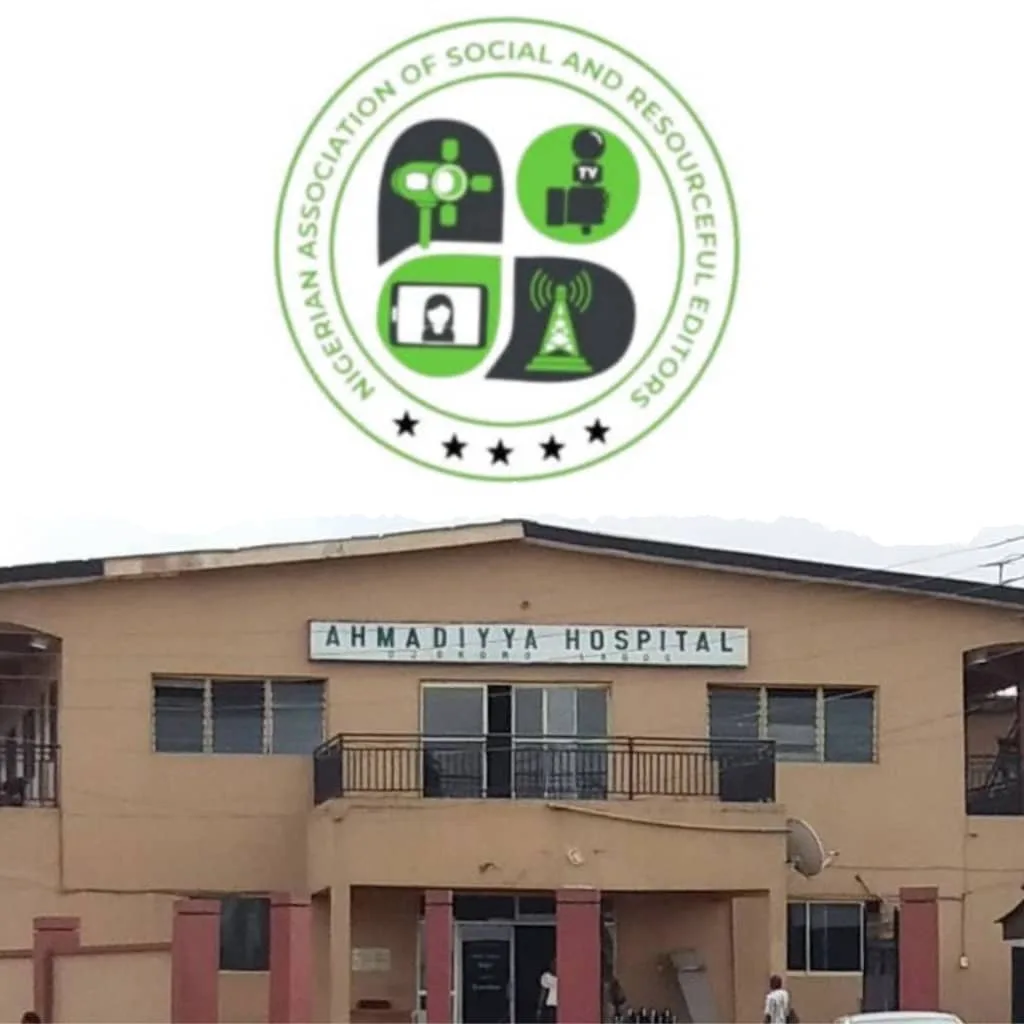

The Nigerian Association of Social and Resourceful Editors (NASRE), led by its National President, Comrade Femi Oyewale, has partnered with Ahmadiyya Hospital, Ijaiye, Lagos State, to provide subsidised healthcare services to 50 journalists and media practitioners on Wednesday, November 25, 2026, as part of efforts to strengthen journalists’ welfare and improve access to essential medical services.
The outreach will bring together media professionals from Lagos and Ogun states, offering participants an opportunity to access affordable medical attention while encouraging regular health checks among practitioners whose demanding work schedules often leave little room for personal healthcare.
Also read: NIS vows to address gaps in visa, residency reforms
Speaking ahead of the exercise, Oyewale said the initiative reflected NASRE’s commitment to addressing the welfare needs of media professionals through practical interventions.
He observed that journalists frequently work under challenging conditions and devote considerable time and energy to keeping the public informed, sometimes at the expense of their own health.
“Journalists make enormous sacrifices to keep society informed, but their own health and wellbeing must not be neglected. As an association, we consider the welfare of media professionals a responsibility we must continue to pursue through practical interventions,” Oyewale said.
He explained that the annual medical outreach formed part of the association’s broader welfare agenda, particularly its efforts to support media practitioners experiencing health challenges and other difficulties.

The partnership with Ahmadiyya Hospital followed a meeting between the hospital’s management and NASRE representatives on November 6, 2026.
Those present included Omotolani Oseni, Lateef Owodunni, NASRE’s Director of Media and Publicity, and Adeyemi Obadimu, the association’s Director of Welfare.
During the meeting, Owodunni described journalists’ welfare as a major priority for NASRE, stressing the importance of encouraging media professionals to pay closer attention to their health.
“Journalists spend so much time working and ensuring that members of the public are informed, but sometimes forget that their own health also deserves attention,” he said.
Owodunni also recalled the association’s previous welfare interventions, including assistance to widows and widowers of deceased journalists and support for colleagues battling critical health conditions.
Responding, the Medical Director of Ahmadiyya Hospital, Dr Samiullah Tahir, assured NASRE of the facility’s readiness to accommodate the 50 participants and provide professional medical attention.
Tahir explained that the hospital maintained affordable charges to make quality healthcare more accessible, noting that financial support from its international headquarters helped sustain its operations.
“The headquarters provides financial support to sustain the hospitals because what we charge patients is deliberately kept very low and affordable. Our priority is to make healthcare accessible to the people,” he said.

He also highlighted the hospital’s medical infrastructure, which includes an X-ray machine valued at more than ₦50 million, laboratory facilities, a solar power system and other essential equipment.
According to Tahir, support from the hospital’s international headquarters had contributed to the provision of some of these facilities, strengthening its capacity to deliver medical services.
The collaboration represents a significant welfare intervention for participating journalists, particularly against the backdrop of the demanding nature of media work and the importance of preventive healthcare.
Beyond the immediate medical assistance, the organisers hope the exercise will encourage journalists to make routine medical examinations a more consistent part of their lives.
Also read: NIS vows to address gaps in visa, residency reforms
For NASRE, the initiative also builds on its continuing efforts to support media professionals beyond their newsroom responsibilities, recognising that the wellbeing of journalists remains an important part of a sustainable media industry.