
FAAN Cashless Payment Policy sparks chaos in Lagos and Abuja as stranded passengers miss flights amid severe airport gridlock
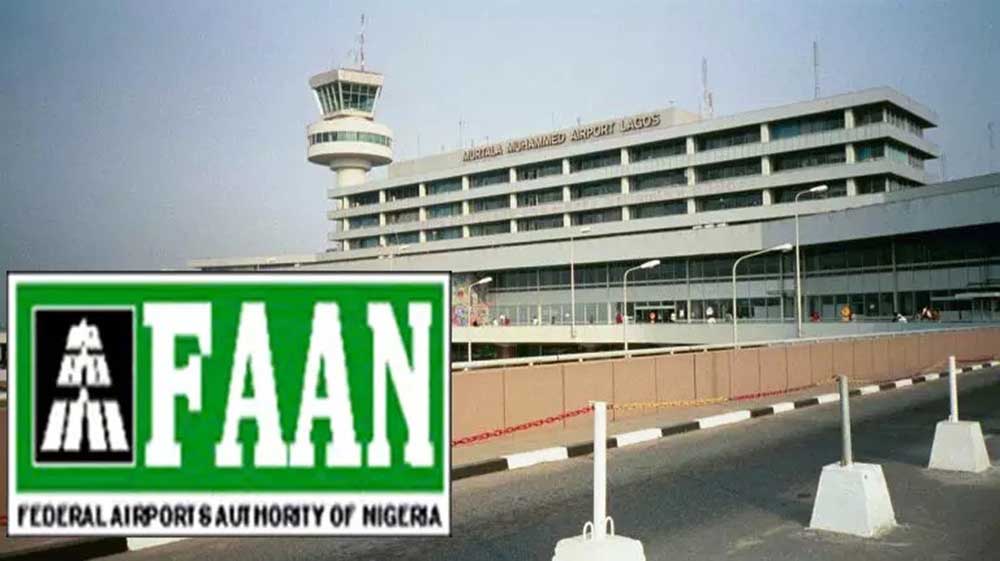
The Federal Airports Authority of Nigeria on Sunday enforced its FAAN Cashless Payment Policy at airport access gates in Lagos and Abuja, triggering massive gridlock, missed flights and widespread frustration among passengers.
Also read: 2027: INEC’s Coup Against Dapo Abiodun
Travellers were left stranded for hours as motorists struggled to comply with the newly activated electronic payment system at entry points.
The disruption marked the first full-scale enforcement of the directive, which eliminated cash payments at airport toll gates.
Several passengers abandoned their vehicles at airport entrances after failing to complete payments.

Others missed scheduled flights after spending hours attempting to access the terminals.
Adedeji Rilewan, a frequent flyer in Lagos, described the experience as harrowing. Adedeji Rilewan said government agencies must balance reform with operational readiness.
“Nobody is against cashless payment, but you don’t introduce a system that prevents people from catching flights. Airports are time-sensitive environments. I had to park my car with my cousins at the gate to catch my flight,” Adedeji Rilewan said.
At the Murtala Muhammed Airport in Lagos, another passenger who identified himself as Wale said the situation was chaotic and unexpected.
“I left home very early, thinking I had enough time for my flight, only to get stuck at the airport gate for over an hour. The payment system was not working smoothly. People were confused, and nobody seemed to know what to do,” Wale said.
The Federal Airports Authority of Nigeria had announced six months ago that payments at revenue points, including airport gates, car parks and lounges, would become fully electronic from September 2025.
Enforcement remained largely dormant until February, when the agency confirmed that full activation would begin on March 1, 2026, to block revenue leakages.
Under the system, airport users must obtain a dedicated FAAN electronic payment card, which must be registered, funded and scanned at entry points.
Although some passengers attempted to pay with commercial bank ATM cards or Point-of-Sale terminals, many transactions were slow or unsuccessful.
Long queues of vehicles stretched several kilometres at entrances in both cities, compounding delays and intensifying commuter anxiety.
Henry Agbebire, spokesperson for the Federal Airports Authority of Nigeria, attributed the disruption to last-minute compliance despite months of public sensitisation.
Henry Agbebire said many motorists attempted to register for payment cards on arrival, causing congestion.
Henry Agbebire added that cash payments had been completely eliminated and that registration points were available near the toll gates.
“We have enough cards for people. The card is free. You only need to load it and you can use it several times before reloading,” Henry Agbebire said.
Henry Agbebire maintained that while POS payments were accepted, such transactions slowed traffic flow.
Henry Agbebire described the initiative as necessary to curb corruption and ensure transparency in revenue collection.

Michael Achimugu of the Nigerian Civil Aviation Authority said the disruption was expected to ease once users obtained the payment cards.
Michael Achimugu expressed optimism that the system would soon become seamless and more efficient.
Also read: 2027: INEC’s Coup Against Dapo Abiodun
Despite those assurances, Sunday’s enforcement exposed glaring operational gaps and underscored the delicate balance between reform and preparedness in Nigeria’s aviation sector.