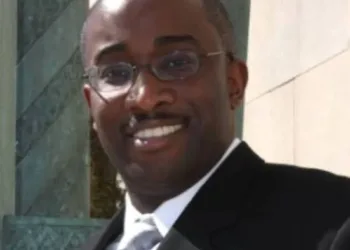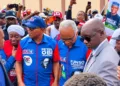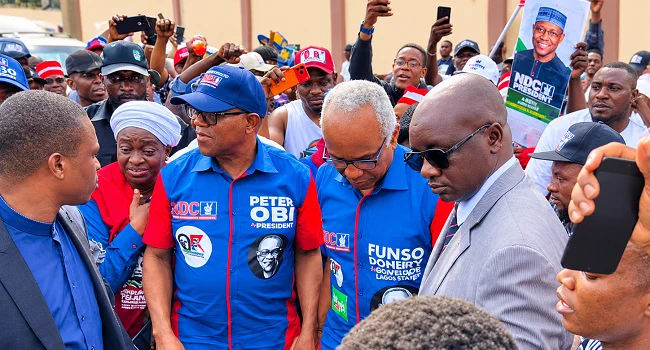

Former Anambra State Governor and Nigeria Democratic Congress (NDC) presidential candidate, Peter Obi, joined the party’s Lagos governorship candidate, Funso Doherty, and other supporters in singing Nigeria’s former national anthem, ‘Arise, O Compatriots’, during a town hall meeting in Oregun, Lagos, on Thursday, November 12, 2026.
The gathering’s recitation of the former anthem appeared to signal opposition to the national anthem restored by President Bola Tinubu’s administration in May 2024.
Also read:NIS chief warns new comptrollers against corruption
Obi and Doherty were seen joining other party members in singing the anthem, which served as Nigeria’s national anthem from 1978 until it was replaced by Nigeria, We Hail Thee under the National Anthem Act 2024.
The moment attracted attention because the change of national anthem remains a subject of public debate, with some Nigerians continuing to express attachment to the former anthem.
The NDC gathering was also marked by tension after suspected political thugs reportedly attacked the venue before Obi’s arrival.
The attackers were said to have invaded the event centre in Oregun with cutlasses, cudgels and stones, forcing some participants to flee. Several people were reportedly injured, while vehicles were damaged during the disturbance.

Despite the disruption, supporters regrouped, and Obi later arrived at the venue, where he was welcomed by party members.
The Lagos State Police Command subsequently confirmed that it had launched an investigation into the attack, while the House of Representatives set up an ad hoc committee to investigate reported political violence and disruptions of political activities across the country.
Nigeria’s current national anthem is Nigeria, We Hail Thee, originally adopted at independence in 1960 before being replaced by Arise, O Compatriots in 1978.
The 2024 legislation restored the original anthem, making it the country’s official national song.
Also read:NIS chief warns new comptrollers against corruption
The NDC supporters’ decision to sing the former anthem has therefore renewed discussion about the change and the freedom of Nigerians to express their views on national symbols.


Mariam Balogun is a contributor to Freelanews.com, covering news, business, and public affairs.