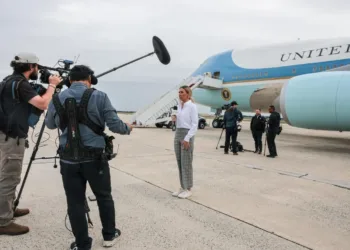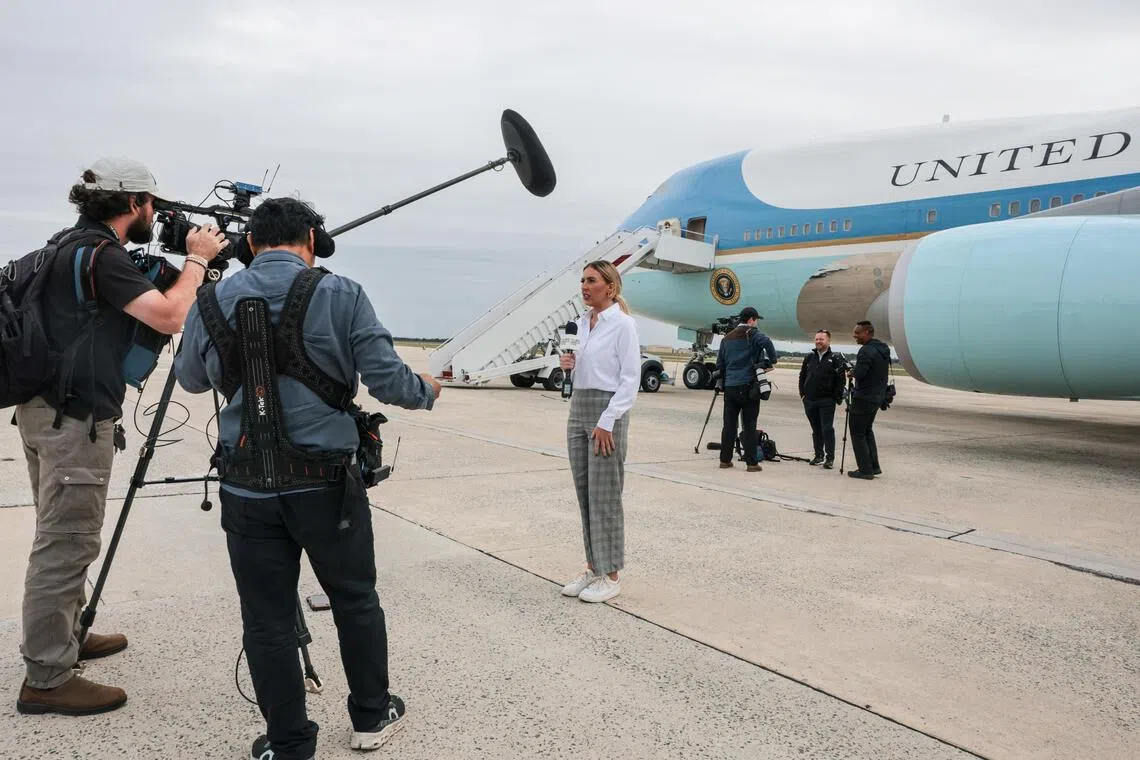

Reporters travelling with United States President Donald Trump were subjected to rare phone restrictions aboard Air Force One on Thursday, November 19, 2026, as the presidential aircraft prepared to leave Shenzhen, China, following the president’s diplomatic visit.
The journalists were asked to surrender mobile phones they had used during their stay in China, with the devices placed in Faraday bags designed to block wireless signals and reduce the risk of surveillance.
Also read: Enugu sports festival delayed until May 2027
According to a White House pool reporter, a staff member collected several journalists’ phones after they boarded the aircraft and placed them in the signal-blocking bags.
The measure was explained as a cybersecurity precaution against possible spying attempts.
A separate video pool report also disclosed that a presidential aide collected temporary burner phones used by White House staff during the visit for disposal or data wiping.
Faraday bags are specialised protective pouches that prevent electronic devices from communicating through wireless networks, helping to limit potential unauthorised access to data.

Burner phones, meanwhile, are temporary mobile devices often used during sensitive trips to reduce the exposure of users’ regular phones to security threats.
The reports indicated that many journalists and photographers had left their regular work and personal phones, laptops and smartwatches inside protective bags before arriving in China on Wednesday.
Those devices were not collected and remained available for use during the return journey. However, reporters who had relied on their regular phones while in China were temporarily separated from them.
The collected phones were returned to the journalists after Air Force One landed in the United States.
The unusual security measures followed Trump’s meetings with several world leaders in Shenzhen, including Chinese President Xi Jinping and Russian President Vladimir Putin.

The three leaders reportedly held discussions on international security, diplomatic relations and global stability.
A joint statement published by Chinese state media and the Kremlin said the leaders had exchanged views on the international situation and committed themselves to maintaining strategic stability and international security.
The statement also outlined proposals to reform the United Nations, protect diplomatic immunity and strengthen the supply and production of refined petroleum products.
The White House had not published the statement at the time of the report.
Also read: Enugu sports festival delayed until May 2027
The phone restrictions highlight the cybersecurity concerns that can accompany high-level diplomatic engagements, particularly when officials and journalists travel to countries where digital surveillance is a concern.

Mariam Balogun is a contributor to Freelanews.com, covering news, business, and public affairs.