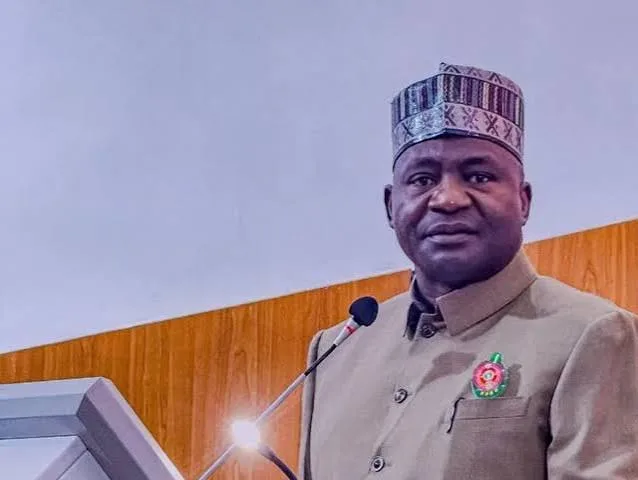

Touray delivered the warning while speaking at the 2026 Goodluck Jonathan Foundation Peace and Security Conference at the National Defence College in Abuja.
The conference, themed “Safeguarding Trust and Strengthening Social Cohesion in Competitive Political Environment”, brought together political leaders, policymakers, security experts and other stakeholders to examine ways of preventing electoral violence and strengthening public confidence in democratic institutions.
Also read:Obasa hails son over silverbird LG chairman award
The former ECOWAS Commission president argued that political disagreements should revolve around competing ideas, policies and leadership choices rather than ethnic, religious or regional identities.
“We must never confuse political competition with political conflict,” Touray said.
He explained that while democracy allows citizens to disagree over political programmes, treating opponents as enemies because of their backgrounds amounts to exclusion rather than genuine democratic participation.
“The first is democracy. The second is exclusion masquerading as democracy,” he added.

Touray identified public trust, credible institutions, responsible political leadership, effective conflict prevention, inclusive development and the fight against misinformation as six important conditions for sustaining peace during elections.
He warned that elections alone could not guarantee democracy if citizens lacked confidence in the institutions responsible for managing the electoral process.
According to him, the judiciary, electoral authorities and security agencies must demonstrate impartiality, accountability and independence to earn public trust.
“Trust cannot be legislated into existence, nor can it be secured through institutional declarations alone. It is earned through consistent conduct, demonstrated impartiality, accountability and responsible leadership,” he said.
He also urged political parties and candidates to resolve electoral disagreements through constitutional and legal channels rather than intimidation, incitement or unconstitutional actions.
Drawing lessons from political crises in Côte d’Ivoire and Kenya, Touray warned that poorly managed electoral disputes and the mobilisation of ethnic identities could destabilise a country.
He also highlighted the role of misinformation and disinformation, particularly manipulated videos, fabricated audio recordings and artificial intelligence-generated images, in worsening political tensions.
“Falsehood now travels faster than truth,” he warned.
He called on political parties, technology companies, electoral authorities and the media to strengthen efforts to tackle false information without undermining freedom of expression.

Touray further stressed that economic hardship, unemployment, inequality and marginalisation could make young people vulnerable to political manipulation.
He urged political leaders to treat young Nigerians as active participants in national development rather than instruments for electoral mobilisation and violence.
Referencing the 2015 presidential election, he praised former President Goodluck Jonathan for accepting defeat and facilitating a peaceful transfer of power, describing the decision as an important example of democratic statesmanship.
“No political victory is worth the sacrifice of national peace. No electoral defeat should ever be interpreted as the defeat of an ethnic, religious or regional community,” Touray said.
Defence Minister Christopher Musa also warned that political rivalry, distrust and social divisions could undermine Nigeria’s national security as the country approaches the 2027 elections.
Represented at the conference, Musa argued that national security could not depend solely on military strength and operational capabilities, stressing that public confidence in government institutions and peaceful coexistence were equally important.
He urged politicians to reject hate speech, inflammatory statements and divisive narratives capable of exploiting Nigeria’s ethnic, religious and political differences.
“Ultimately, no political ambition is worth the loss of innocent lives, the destruction of property or the destabilisation of our country,” the minister said.
Musa also called on security agencies to maintain professionalism, impartiality and respect for the rule of law, while encouraging citizens to cooperate with them in protecting lives and property.
He maintained that safeguarding national peace required the involvement of government institutions, political parties, traditional rulers, religious organisations, civil society groups, the media and young people.
The minister’s warning reflects concerns he has raised previously about electoral security.
In August 2026, he cautioned that no security arrangement could guarantee peaceful elections if political actors chose violence over dialogue.
The warnings from Touray and Musa come amid growing political activities ahead of the 2027 general elections, with concerns about electoral violence, misinformation and declining public confidence in democratic institutions.
Former President Jonathan also used the conference to caution against ethnic rivalry, political intolerance and thuggery, describing the deliberate promotion of divisions as a threat to Nigeria’s national existence.
The conference therefore placed emphasis on a central challenge facing Nigeria’s next electoral cycle: how to sustain vigorous political competition without allowing disagreements to develop into violence or deepen divisions among citizens.
For Touray and Musa, the responsibility extends beyond politicians and security agencies.
Voters, community leaders, religious institutions, young people and the media also have important roles in protecting the country’s democratic process.
Also read:Obasa hails son over silverbird LG chairman award
Their central message was that political offices are temporary, but the consequences of electoral violence could affect the country long after the election results have been declared.

Mariam Balogun is a contributor to Freelanews.com, covering news, business, and public affairs.