Departing AfDB President Akinwunmi Adesina highlighted a decade of unprecedented growth, increasing the bank’s capital from $93 billion to $325 billion and impacting 565 million lives, while also urging his successor to champion Africa’s interests amidst funding challenges
[dropcap]A[/dropcap]frican Development Bank (AfDB) President Akinwunmi Adesina, who is set to conclude a decade of transformative leadership, on Monday highlighted his significant achievements, including driving the multilateral institution’s capital from $93 billion in 2015 to an unprecedented $325 billion.
Also read: UBA secures US$175m facility from AfDB towards supporting private sector, infrastructure development, women-own business
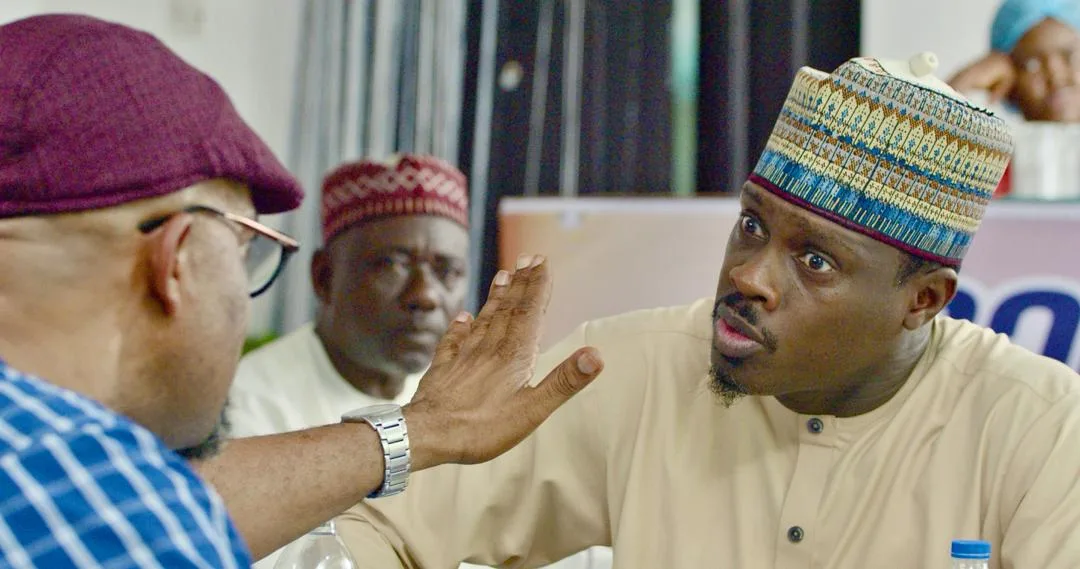
Speaking at the President’s Media Welcome Breakfast during the ongoing AfDB Annual Meetings in Abidjan, Adesina, the first Nigerian to lead the Bank, reflected on his tenure with immense pride.
“The two things I am proud of are that we were able to mobilise resources for this like never before in its entire history. The capital of the bank grew from $93 billion to $318 billion. In fact, yesterday I was talking with my vice president of finance, and she told me that because of the variation in currencies and our value, it is not even $318 billion, it is $325 billion. So, I’m very proud of the fact that we mobilised that amount of resource,” he stated.
Adesina also underscored the profound impact of the AfDB’s flagship development framework, the High 5s, revealing it has directly impacted 565 million lives across the continent.
Major gains were recorded in critical sectors including healthcare, food security, transport, electricity, and water access.
Specifically, he noted that 128 million people now have access to improved health services, 121 million to improved transport, 104 million are food secure, 63 million have potable water, 34 million have improved sanitation, and 28 million now have access to electricity.
He added that an additional 300 million Africans are projected to gain access to electricity by 2030 through initiatives like the Mission 300 Energy Summit.
The two things I am proud of are that we were able to mobilise resources for this like never before in its entire history. The capital of the bank grew from $93 billion to $325 billion.
Beyond financial growth, Adesina asserted, “The second thing I’m very proud of is that the AfDB has helped to shape, define, and defend the interests of Africa everywhere in the world.”

He humorously noted the personal toll of his relentless drive: “When I was elected in 2015, I did not have any grey hair then. Now my hair has turned several shades of grey. Grey from 10 years of unrelenting drive to push Africa forward; grey from our tireless efforts to turn the Bank into a globally respected financial institution, where it was ranked as the best multilateral financial institution in the world.”
He also highlighted the successful raising of $8.9 billion for the African Development Fund’s 16th replenishment, the highest in its history.

On his advice to his successor, whose election is slated for this Thursday, May 29, Adesina urged them to “build on the past, to look far into the future, and to find within themselves what the courage it takes to stand up for Africa’s interest.”
He cautioned against superficial initiatives, stating, “This president, I always say, Africa does not need Mickey Mouse projects from the Mickey Mouses. I hope I have given enough for my successor.”
He emphasized the need for a leader with vision, boldness, and the courage to confront ideas and philosophies that do not advance Africa’s interests.
The outgoing president’s tenure saw the bank respond swiftly to global crises, such as the Russia-Ukraine war, with a $1.5 billion Emergency Food Production Facility.
This initiative enabled 13 million farmers across 29 countries to access seeds and fertilizers, resulting in 44 million metric tons of food produced, exceeding targets by 116% and valued at $17.3 billion.
The next AfDB President will face significant challenges, including potential funding cuts from the US government, as reported by Reuters, with the Donald Trump administration proposing to cut $555 million in funding to the AfDB and its African Development Fund.
Five candidates from South Africa, Senegal, Zambia, Chad, and Mauritania are vying to replace Adesina, who will step down in September after serving the maximum two five-year terms.
The annual gathering in Abidjan comes as heavily indebted African governments seek new financing sources for development.
The next round of replenishment for the ADF, which is held on a three-year cycle, is scheduled for November and is targeting to raise $25 billion.
Amadou Hott of Senegal, a front-runner, emphasized the need for Africa to tap into domestic private capital to fund development and reduce reliance on costly international borrowing, noting that Africa’s wealthy individuals hold about $2.5 trillion in assets, with another $2 trillion managed by pension funds, sovereign wealth funds, and insurers.
Also read: ‘Would go a long way’ AfDB secures $15.6 billion in funding to link Nigeria to Ivory Coast by road
He proposed an African credit rating company to help sovereign borrowers secure better lending terms, arguing that African countries often face borrowing costs up to 400 basis points higher than peers with similar ratings.