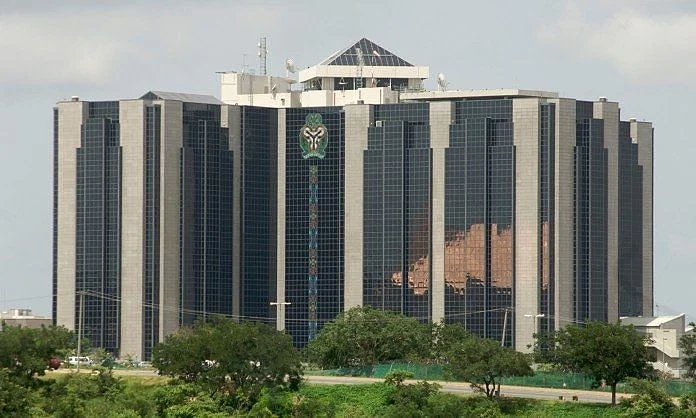

The Central Bank of Nigeria (CBN) withdrew more than N90tn from the financial system through Open Market Operations (OMO) securities between January and November 2026, intensifying efforts to contain inflationary pressures ahead of the 2027 general elections.
The figure represents more than double the N40.90tn withdrawn in 2025, highlighting the apex bank’s increasingly aggressive approach to managing liquidity and preventing excess money from driving up prices.
Also read: Trump’s reporters face rare phone restrictions on Air Force One
Data from CBN auctions, FMDQ and the Financial Market Dealers Association showed that the bank’s liquidity mop-up operations gathered momentum during the year, with September recording the highest allotment of N17.5tn.
The CBN withdrew N13.41tn in January, followed by N6.3tn in February. The figure dropped to N2.36tn in March before rising to N4.48tn in April.
The bank subsequently absorbed N5.42tn in May and N13.96tn in June. Its operations moderated to N7.18tn in July and N4.72tn in August before reaching the September peak.
In October, the CBN allotted N6.182tn in new OMO bills, while N9.051tn worth of existing securities matured, resulting in a net repayment of approximately N2.87tn before other adjustments.

The apex bank then withdrew another N7.53tn through auctions conducted on November 3, 4 and 10.
However, the reported N90tn figure represents gross withdrawals and does not necessarily reflect the net liquidity absorbed, as it excludes some OMO maturities.
The distinction is important because matured securities return funds to the financial system.
The CBN’s intensified operations come amid concerns that increased government and political spending ahead of the 2027 elections could inject substantial funds into the economy, making inflation control more difficult.
Members of the CBN’s Monetary Policy Committee raised similar concerns following their 307th meeting held on September 21 and 22, 2026.
Deputy Governor of the Corporate Services Directorate, Dr Muhammad Abdullahi, warned that election-related fiscal expansion could increase inflationary pressures through transportation, energy and production costs.
“I recognise that election-related fiscal expansion and other incipient price pressures may propagate through transport, energy and production cost channels, amplifying economy-wide cost-push inflation,” Abdullahi said.
Another committee member and Senior Fellow at the Brookings Institution, Dr Aloysius Ordu, called for stronger safeguards against excessive government spending as political activities intensify.
MPC member Bandele Amoo also identified political activities and budget implementation as possible sources of renewed spending pressure.
CBN Governor Olayemi Cardoso said the bank had studied previous election cycles and developed measures to manage possible liquidity pressures.
“We are ready,” Cardoso said, assuring that the bank would monitor currency in circulation, banking system liquidity, monetary aggregates and foreign exchange demand.
He added that the CBN would proactively deploy available instruments to absorb excess liquidity.
The World Bank has also warned of growing fiscal pressures.
In its October Nigeria Development Update, titled Beyond the Federal Purse: How Higher Revenues Reshaped State Priorities, the institution projected that Nigeria’s consolidated fiscal deficit would widen from 3.1 per cent of Gross Domestic Product in 2025 to 3.5 per cent in 2026.
The bank attributed the expected increase to stronger capital spending by states, rising federal personnel and interest costs, and pre-election expenditure.

Economists have linked the growing liquidity in the financial system to higher government revenues, increased allocations to state and local governments, and political spending.
A Professor of Economics and Public Policy at the University of Uyo, Akpan Ekpo, said the CBN was attempting to prevent excess funds from increasing consumer demand and pushing up prices.
He, however, expressed doubts about the effectiveness of the intervention, warning that the scale of expected election-related expenditure could undermine the bank’s efforts.
Similarly, the Founder of the Centre for the Promotion of Private Enterprise, Dr Muda Yusuf, identified increased government revenue and public sector deposits in commercial banks as major contributors to the liquidity build-up.
Yusuf also pointed to spending by political parties, candidates, the Independent National Electoral Commission and security agencies as potential sources of additional funds entering the economy.
Managing Director of Highcap Securities Limited, David Adonri, identified government spending, bank recapitalisation and transactions involving government securities as other factors that could influence liquidity levels.
Also read: Trump’s reporters face rare phone restrictions on Air Force One
The CBN’s challenge is therefore to sustain monetary stability while managing the financial pressures expected to accompany the 2027 election cycle.

Mariam Balogun is a contributor to Freelanews.com, covering news, business, and public affairs.