


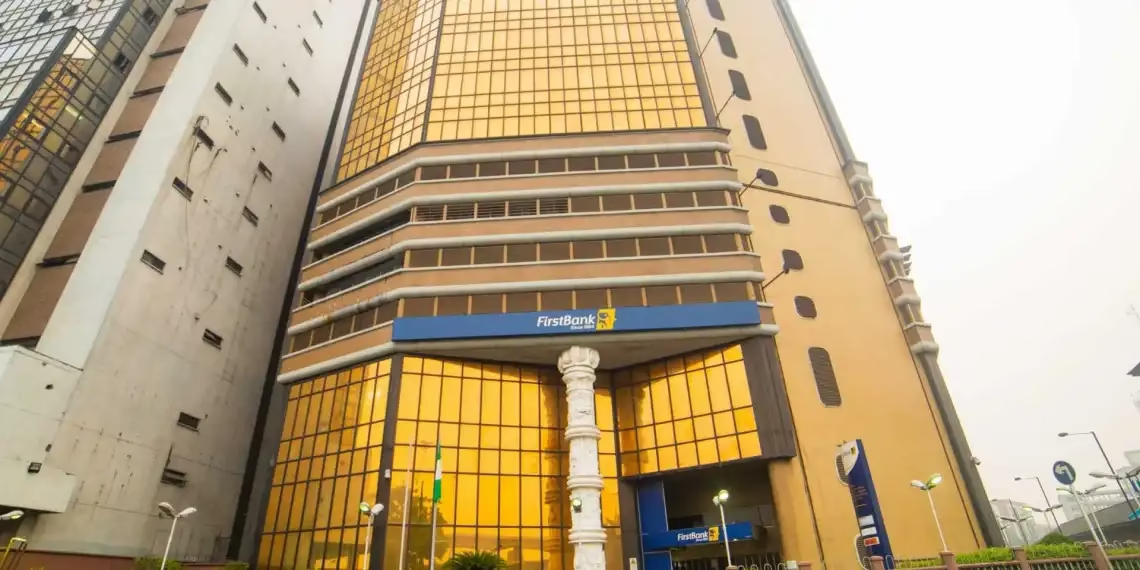

General Hydrocarbons court order stops enforcement actions on its assets amid $718 million debt dispute involving Atlantic Energy, AMCON, and First Bank
A significant court order has been secured to prevent any enforcement actions against the assets of General Hydrocarbons in relation to a contentious debt linked to Atlantic Energy Drilling Concept Nigeria Limited.
Also read: Court freezes accounts of businesswoman Okonjo Udokanma over $97,982 debt to Providus Bank
The Federal High Court in Lagos directed the Asset Management Corporation of Nigeria (AMCON), First Bank, and the Attorney General of the Federation to halt all measures targeting General Hydrocarbons and its properties.
The restraining order forbids freezing of accounts, appointment of asset managers, or any recovery attempts against General Hydrocarbons, its directors, or shareholders, pending further legal proceedings.
Judge Ambrose Lewis-Allagoa granted this temporary injunction following a fresh lawsuit filed by General Hydrocarbons, owned by Nduka Obaigbena, chairman of THISDAY Group.

This development stems from a US$718 million debt originally owed by Atlantic Energy to First Bank, later sold to AMCON.
The dispute centres on crude oil pledged as collateral aboard the FPSO Tamara Tokoni, which First Bank claimed to have rights over.
General Hydrocarbons insists it is not liable for Atlantic Energy’s debts and emphasises its separate status in the financial arrangement.
General Hydrocarbons argues that enforcement should only target Atlantic Energy or First Bank, not itself, citing a tripartite deed and loan agreements that outline distinct responsibilities.

The legal battle highlights complex banking, oil sector dealings, and allegations of reckless lending linked to past petroleum ministry officials.
This court order is a crucial win for General Hydrocarbons, offering them temporary protection while the dispute unfolds.

Also read: Court shuts down Heritage Bank over unpaid debt
The case has attracted wide attention due to its ties with high-profile figures and the enormous sums involved, revealing ongoing challenges within Nigeria’s banking and oil industries.
Source: Read more at saharareporters.com

Peculiar Adirika is a journalist and contributor to Freelanews.com, covering news, business, and public affairs.


