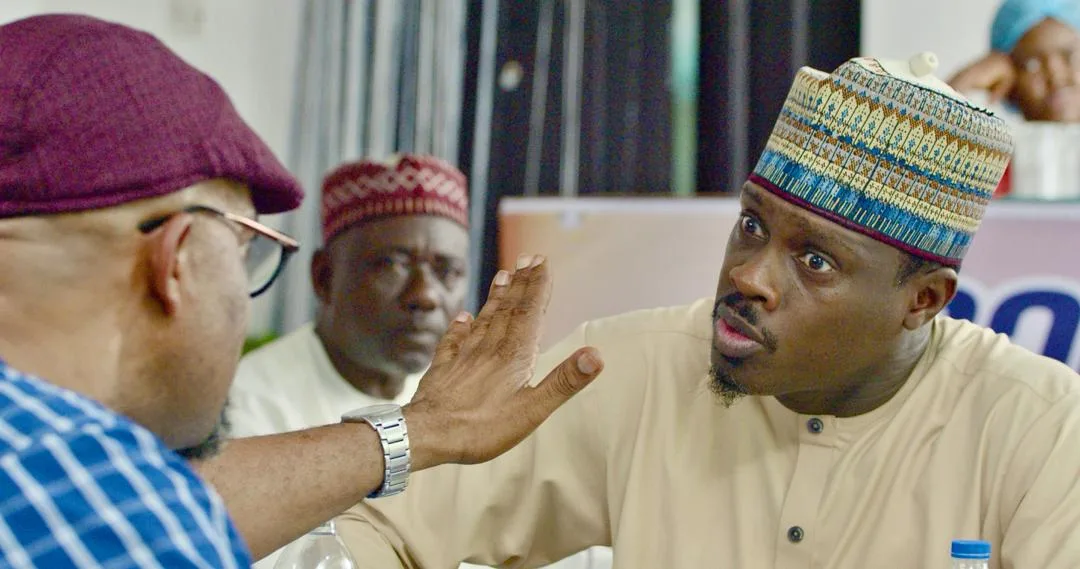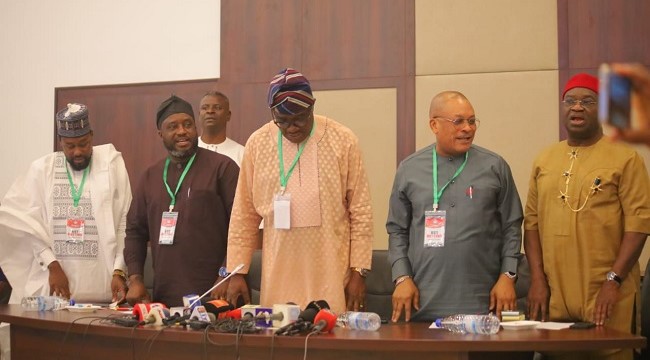
Kola Karim urges Nigeria to aim for 5 million barrels per day by 2030 and stronger energy reform execution at the FII 2025 in Riyadh.
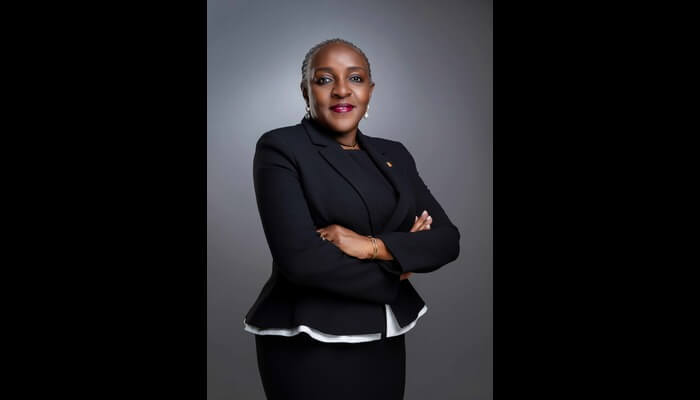
At the ongoing Future Investment Initiative (FII) in Riyadh, Saudi Arabia, Mr Kola Karim, Chairman of Shoreline Group, has urged Nigeria to raise its ambitions in the oil and gas sector, calling for a production target of five million barrels per day by 2030 rather than the current three-million-barrel goal.
Also read: over 34 million Nigerians will face food insecurity in 2026
Speaking with Arise Business Correspondent during the ninth edition of the FII, Karim said Nigeria must pair bold targets with disciplined execution and leadership, warning that plans without action continue to slow national progress.
“We often assume that leadership is only a public-sector affair,” he said. “True leadership is about service — and both the public and private sectors share that social contract with society.”
Karim stressed that the relationship between business and community — what he termed the social contract — underpins long-term peace and productivity. He cited the Niger Delta as an example of how mutual respect and engagement sustain safe, stable business operations.
“Our social contract with the communities we engage in helps us run a successful, secure business,” he noted.
Comparing Nigeria’s development trajectory to Saudi Arabia’s, Karim praised the Kingdom’s disciplined, long-term execution of plans, which has delivered visible progress every quarter.
“It’s not that Nigeria and African nations lack plans,” he said. “The real challenge is consistent execution and follow-through. What Saudi Arabia has done in recent years is phenomenal.”
Karim applauded President Bola Ahmed Tinubu’s administration for issuing an executive order** raising spending limits for oil and gas operators from $2 million to $10 million, a move he said was already driving investment and boosting production.
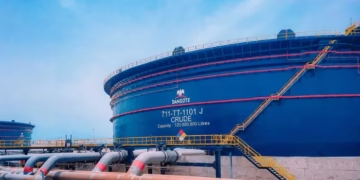
“The problem isn’t our reserves — we have 47 billion barrels of oil and 210 trillion cubic feet of gas — it’s the ageing infrastructure,” he explained.
He noted that production had climbed to 1.7 million barrels per day, with renewed drilling activity likely to surpass three million. But he insisted Nigeria must be more ambitious:
“For me, the focus shouldn’t be three million. By 2030, Nigeria should target five million barrels a day,” he declared. “The U.S. produces 12.5 million and targets 15; Saudi Arabia is at 11.5. Ten years ago, the UAE was producing what Nigeria was — today, they’re at 4.2.”

Karim called for accelerated investment in the gas value chain, describing Nigeria’s underutilised 210 TCF reserves as a major growth opportunity.
“We’re only on our seventh LNG train, while smaller nations have reached their fifteenth. Oil and gas growth must go hand in hand,” he said.
While supporting government efforts to expand **Compressed Natural Gas (CNG)** adoption, he warned that safety, logistics, and distribution** systems must be strengthened.
“CNG is gas — it must be transported and dispensed safely. Without proper infrastructure, the policy won’t achieve its goals.”
On the global energy transition debate, Karim echoed industrialist Aliko Dangote’s view that Africa should not be held to the same environmental standards as advanced economies.
“Africa contributes less than 3% of global emissions,” he said. “It’s unfair to benchmark us against OECD countries that are already on their fourth industrial revolution when Africa hasn’t had its first.”
He argued that Africa must pursue a balanced transition, combining hydro, solar, and fossil fuels responsibly:
“We can’t abandon oil and gas overnight — 90% of our foreign exchange comes from them. The goal is to build infrastructure for a gradual transition that supports growth.”
Karim warned that Africa’s youthful population — 65% under age 30 — could become a risk without inclusive economic leadership.
“If 65% of a continent’s youth are poor, they’ll search for prosperity elsewhere,” he cautioned. “When I seek funds to build power plants and schools, I’m helping to save the world. If Africa fails, the world will feel it.”
Closing his FII remarks, Karim urged for a multipolar world driven by shared prosperity rather than competition.

Also read: Nigeria FATF grey list removal boosts investor confidence
“We cannot live in a unipolar world; we must live in a unified one with diverse ideals — but we must execute for humanity,” he said. “Wealth has no value if it exists amid poverty. Shared prosperity is the only path to peace.”
Source: Read more at iretura.com