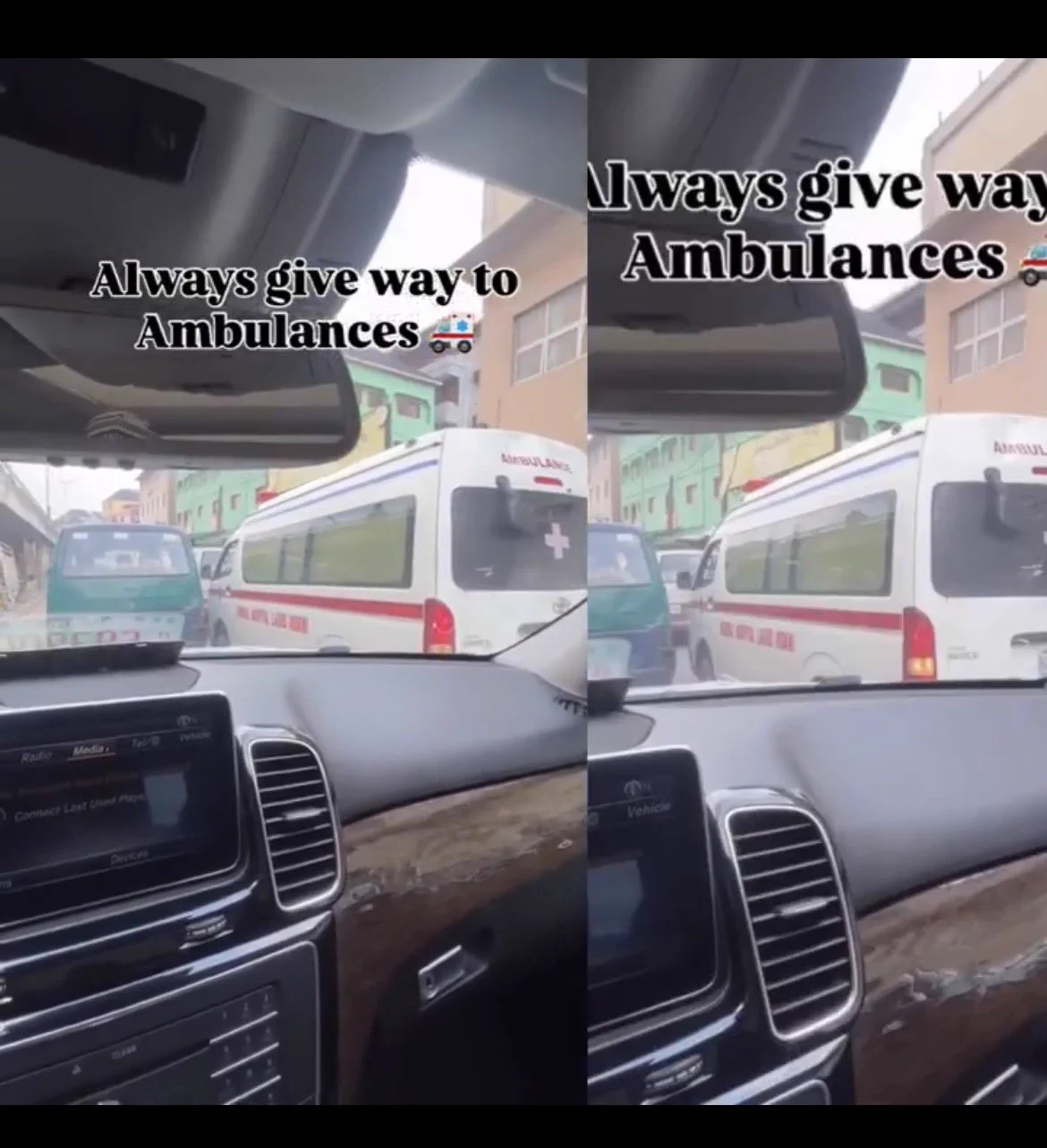

A man has raised concerns over the alleged widespread abuse of vehicle sirens in Nigeria after an ambulance was caught in traffic, highlighting the challenges faced by emergency responders on the country’s roads.
The incident, captured in a video circulating on social media, showed the ambulance struggling to navigate traffic despite using its siren to alert other road users.
Reacting to the footage, the man argued that the frequent misuse of sirens by unauthorised motorists had contributed to a situation in which road users no longer respond appropriately when emergency vehicles demand passage.
He expressed concern that the abuse of sirens by individuals seeking to gain an advantage in traffic could undermine the urgency associated with genuine emergency situations.
The incident has drawn attention to the importance of allowing ambulances, fire service vehicles and other authorised emergency responders to move freely when attending to urgent situations.

Under Nigeria’s National Road Traffic Regulations, emergency vehicles, including ambulances and firefighting vehicles, may exceed prescribed speed limits when responding to emergencies, provided their drivers exercise due care for other road users and operate the required warning devices.
The regulations also prohibit motorists from knowingly obstructing vehicles authorised to use sirens, flashers and beacon lights.
The Federal Road Safety Corps (FRSC) is responsible for regulating the use of sirens and other warning devices on vehicles, while its list of traffic offences includes violations relating to unauthorised siren use.
The Nigeria Police Force has also previously warned against the illegal use of sirens, revolving lights and covered number plates, directing officers to impound vehicles involved in such practices.
The latest incident has renewed calls for stricter enforcement of existing regulations and greater awareness among motorists about the importance of giving way to emergency vehicles.

It has also highlighted the need to preserve the public’s recognition of emergency signals so that ambulances and other responders can reach people in need of urgent assistance without unnecessary delays.

AbdulBasit Saba is a journalist and contributor to Freelanews.com, covering news, business, and public affairs.