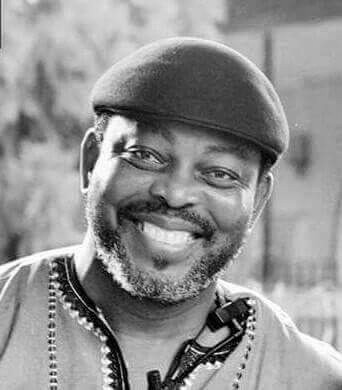

ABUJA, Nigeria, 16 November 2026: Former Deputy National Publicity Secretary of the All Progressives Congress (APC), Comrade Timi Frank, has warned President Bola Ahmed Tinubu that attempting to secure a second term in 2027 through an election outcome that does not reflect the wishes of voters could plunge Nigeria into a political crisis.
Frank, who also serves as Ambassador to East Africa and the Middle East for the United Liberation Movement for West Papua (ULMWP), urged Tinubu to reconsider his re-election ambition and guarantee a free, fair and credible electoral process.
Also read: Okoebor takes charge as plateau police commissioner
He maintained that Nigerians would not accept the imposition of a candidate against their expressed choice at the ballot box.
“Nigerians will not accept a situation in which someone is declared the winner when the people know they did not vote for him. They should not push the country into a crisis by attempting to impose him on the people,” Frank warned.
The former APC spokesman’s intervention comes amid growing political activity ahead of the 2027 general election and renewed public debate over the administration’s popularity, economic performance and the credibility of the electoral process.
His comments followed the reception Tinubu received after attending Friday prayers at the Shehu Shagari Central Mosque in Area 1, Garki, Abuja, on 13 November.

Some worshippers were captured in videos chanting “Ba ma yi, ba ma so”, expressions used to communicate rejection, as the President’s convoy departed the mosque. The footage attracted considerable attention on social media, prompting political reactions from opposition figures and government supporters.
However, the circumstances surrounding the incident have attracted competing explanations.
Witnesses who spoke to Premium Times suggested that restrictions imposed on worshippers during the President’s visit, including blocked access and delayed departures, contributed to the frustration that produced the chants.
Presidential aides subsequently disputed aspects of the negative portrayal of the incident, with Senior Special Assistant on Digital Engagement, Strategy and New Media, O’Tega Ogra, releasing separate footage showing Tinubu waving to people as he left the mosque.
The distinction is important because the hostile chants were reported by multiple news organisations, while claims that objects were thrown at the presidential convoy remained disputed.
Frank acknowledged that expressing political dissatisfaction during a religious gathering was inappropriate.
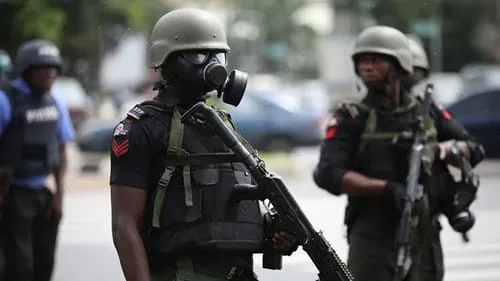
He nevertheless commended the President’s security personnel for protecting Tinubu and preventing the situation from escalating.
He argued that the incident should serve as a warning to the President about the possible disconnect between political assurances from his associates and public sentiment.
“The rejection was total and unmistakable. No Nigerian president has been embarrassed like this publicly. The way Nigerians rejected him speaks volumes but should he decide to go ahead and he loses, he should be prepared to accept defeat just like former President Goodluck Jonathan did,” Frank said.
The former ruling-party official also questioned assurances from political figures who have reportedly promised Tinubu substantial electoral support in the Federal Capital Territory and Edo State.
He specifically referred to FCT Minister Nyesom Wike’s reported prediction that the President could secure 80 per cent of votes in Abuja and Edo State Governor Monday Okpebholo’s pledge to deliver 2.5 million votes for Tinubu in Edo.
Frank argued that such projections should not be mistaken for guaranteed electoral support, warning that political loyalty among officeholders does not necessarily translate into votes from ordinary citizens.
He further alleged that some political associates were giving the President overly optimistic assessments because of personal financial interests.
However, he did not provide independent evidence to substantiate the allegation.
“I have seen the confidence with which some people are assuring President Tinubu that he will win the Federal Capital Territory, FCT, and that he is firmly in control. But the reported embarrassment he suffered during a prayer session in Abuja tells a different story,” he said.
Frank maintained that the President needed candid assessments of his administration’s performance rather than assurances designed to reinforce his re-election ambition.
He urged Tinubu to consider stepping aside, arguing that continuing with the presidential campaign could prove difficult if public dissatisfaction translated into votes against the ruling party.
The former APC spokesman also drew comparisons with opposition figures, including former Vice-President Atiku Abubakar and former Anambra State Governor Peter Obi.
According to Frank, the reception these politicians receive during public engagements demonstrates the importance of genuine popular support, rather than political mobilisation sustained through financial inducements.
He identified hunger, unemployment, rising living costs and insecurity as major sources of public frustration, arguing that these challenges should feature prominently in the President’s assessment of his political standing.
The criticism comes against the backdrop of earlier warnings from Frank concerning the conduct of the 2027 elections.
On 31 October, he cautioned Tinubu and the Independent National Electoral Commission (INEC) against alleged electoral manipulation, insisting that the credibility of the next general election would depend on whether the results reflected the actual votes cast.
On 4 November, Frank also raised concerns about alleged interference with opposition activities, particularly following controversy surrounding political mobilisation in Sokoto State.
These interventions suggest that his latest remarks form part of a broader campaign for electoral transparency rather than an isolated reaction to the Abuja mosque incident.
Although the government has defended the reforms as necessary to improve public finances and strengthen the economy, their effects on household purchasing power, transportation costs and business operations have remained central to public debate.
The political environment has also become increasingly competitive, with opposition figures seeking to build broader alliances and challenge the ruling APC’s electoral position.
Nevertheless, public demonstrations, social media reactions and individual political endorsements cannot independently establish the level of nationwide support for any candidate.
Electoral outcomes will ultimately depend on voters’ decisions and the credibility of the process through which those decisions are recorded and declared.
Tinubu’s administration has also publicly rejected suggestions that political violence or intimidation should influence the electoral process.
Following reports of tensions at political gatherings, the President called for peaceful political engagement and warned against anti-democratic conduct.
“President Tinubu still has an opportunity to make history and have his name written in gold. He can achieve this by ensuring that the country conducts a free, fair and credible election,” he said.

His central message is that political power must ultimately rest on the freely expressed wishes of the electorate, not the assurances of influential associates or attempts to influence the outcome.
As preparations for 2027 gather momentum, the challenge for Nigeria’s political leadership will be to manage competing ambitions, address public concerns and preserve confidence in democratic institutions.
Also read: Okoebor takes charge as plateau police commissioner
For Frank, the consequences of failing to do so could extend beyond the fortunes of an individual candidate, with the country’s political stability and democratic credibility also at stake.

Mariam Balogun is a contributor to Freelanews.com, covering news, business, and public affairs.