
West Africa Standby Force revival proposed by Tinubu, who offers Nigeria’s NCTC Abuja as an intelligence hub to tackle Sahel insecurity
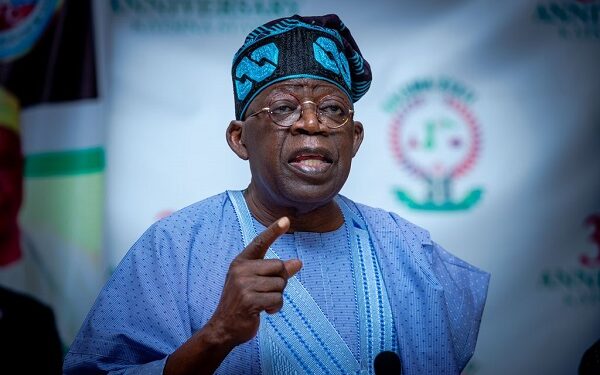
President Bola Tinubu has called for the reactivation of a West Africa Standby Force to strengthen collective security responses across the region and the Sahel, urging neighbouring countries to utilise Nigeria’s National Counter Terrorism Centre in Abuja as a shared intelligence and operations hub.
Also read: Wale Tinubu delivers powerful call to embrace failure for nation-building
Tinubu’s position was delivered in Nigeria’s official statement by the Minister of State for Foreign Affairs, Ambassador Bianca Odumegwu-Ojukwu, at the Conference on Security Situation, Operational Challenges and Future Risk Trajectories in West Africa and the Sahel, held in Accra, Ghana, from January 29 to 30.
According to a statement issued in Abuja by the minister’s Special Assistant on Communications and New Media, Magnus Eze, the President reaffirmed Nigeria’s commitment to regional peace, security and stability through stronger multilateral cooperation.
“Nigeria is favourably disposed to more collaborative and multilateral approaches aimed at dealing with the security crisis in the Sahel,” Tinubu said.
He noted that Nigeria has continued to disrupt terrorist activities through cooperation with regional and continental institutions, including the Regional Intelligence Fusion Unit, Liaison Fusion Unit, Eastern African Fusion Unit and the Committee of Intelligence and Security Services of Africa.
Tinubu recalled that in 2025, the National Counter Terrorism Centre signed a Memorandum of Understanding with the African Union on joint counterterrorism efforts, positioning the centre as a potential regional intelligence coordinating hub.
“The centre is therefore well positioned to support regional mechanisms and serve as an intelligence coordinating hub in our unified counterterrorism efforts,” he said.
The President warned that terrorist groups are increasingly exploiting cyberspace for misinformation and disinformation campaigns that threaten regional stability.
He urged West African states to leverage Nigeria’s National Cyber Security Centre to build coordinated mechanisms to counter cyber-enabled threats.
Tinubu said the security situation across large parts of West Africa remains volatile, citing rising casualties, including among women and children.
He attributed the worsening crisis to the absence of a unified counterterrorism focal point and thinly spread defence formations, which have created power vacuums exploited by militants.
“These power vacuums have afforded Sahel-based terrorists the freedom to expand their activities from the central Sahel to littoral West Africa, with Nigeria, Benin, Togo and Ghana among those bearing the brunt,” he said.
He also warned of the risk that drug cartels, pressured by anti-narcotics operations in South America, may relocate to weaker jurisdictions in West Africa, potentially forming alliances with insurgent groups.

Tinubu identified political divisions, including the emerging ECOWAS and AES split, overreliance on foreign support and reluctance to subordinate defence decisions to regional authorities as obstacles to effective cooperation.
“To address longstanding and emerging misapprehensions among member states, there is a need to separate political proclivities from security collaborative initiatives, to pave the way for sustainable security partnerships,” he said.
Beyond military solutions, the President urged countries to confront root causes such as poverty, governance deficits and marginalisation.

He called for de-escalation of tensions between ECOWAS and AES states and the creation of an inclusive framework reflecting shared security and economic interests.
Also read: First Lady Oluremi Tinubu commissions dream center at OAU
Tinubu expressed optimism that deliberations at the Accra conference would yield a sustainable blueprint for a unified regional counterterrorism strategy.