


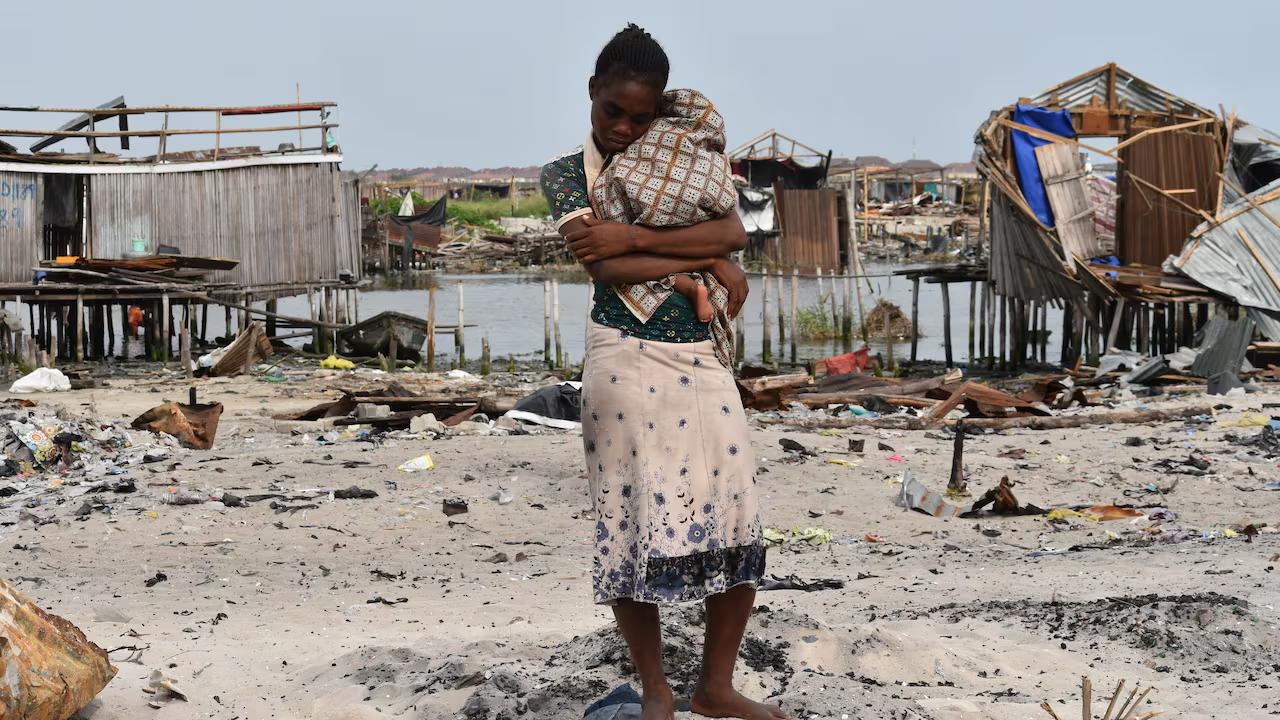

A disabled children eviction crisis unfolds in Lagos after a therapy centre in Yaba was forcibly shut, leaving 32 children displaced
What began as a normal therapy morning for children with developmental challenges at Magnificient Therapy Services quickly descended into chaos after the facility was forcibly evicted from its premises in Yaba, leaving 32 vulnerable children stranded and without stable care.
Also read: Oworonshoki demolition compensation enters new phase
The court enforced eviction, which took place on Wednesday, May 13, 2026, disrupted therapy sessions, displaced children living with autism spectrum disorder, cerebral palsy, Down syndrome, dyslexia, and other developmental conditions, and exposed them to uncertainty and emotional distress.
For eight year old Chinedu, whose name has been withheld, the morning had started with his usual guided movement therapy routine. Moments later, unfamiliar men stormed the building, furniture was dragged outside, and caregivers scrambled to shield frightened children from the confusion unfolding around them.
Children dependent on wheelchairs and physical assistance were hurriedly moved outside the premises as staff members struggled to calm them.

For many of the children, routine is not simply comforting but essential for survival and developmental progress. The sudden disruption of their environment has raised fears of regression in their physical, emotional, and cognitive development.

“This is not just a building we lost,” co founder and therapist Bidemi Jaiyesimi said emotionally. “We lost a safe space for children who depend on routine, care, and stability to survive each day.”
Jaiyesimi described the eviction as traumatic for both staff and children, recalling how therapy equipment and personal belongings were thrown outside during the exercise.
“It happened so fast. Some of our children who cannot walk had to be kept outside the building. It is an image I will never forget. Their belongings were scattered outside. It is very depressing,” he said.
The disabled children eviction crisis followed a prolonged tenancy dispute involving the facility, which had occupied the building for 16 years.
According to Jaiyesimi, the centre had received a six month notice to vacate and was trying to raise funds for relocation before the eviction was carried out.
“We were not refusing to move. We were trying to survive the process without abandoning the children,” he explained.
Founded in 2010 in a modest two bedroom apartment with just two children, the therapy centre gradually expanded into a critical support system for children with special needs who are often excluded from mainstream care and education structures.
The centre currently caters for 32 children with the support of 23 staff members and survives largely on donations. Some parents reportedly contribute between N80,000 and N100,000 every three months despite worsening economic hardship.
Following the eviction, several parents rushed to the facility in panic and hurriedly took their children home. However, not all children had immediate guardians or safe alternatives.
Some orphans and children without family support were temporarily moved into an uncompleted building, while neighbours stepped in to offer emergency shelter.

Jaiyesimi said the organisation had appealed for intervention, including reaching out to the Sabo Divisional Police Station, but the eviction still proceeded.
“We are stranded now. These children cannot just be moved from place to place like luggage. We need a safe, permanent facility. This is a cry for help,” he said quietly.
The therapist added that government institutions were aware of the centre’s struggles but noted that available support remained inadequate.
“We have spoken to the available government structures, but the support is not enough. There are too many needs, too many children, and not enough systems built specifically for cases like this,” Jaiyesimi lamented.
The centre’s location in Yaba had also provided valuable access to nearby health institutions, including physiotherapy and orthopaedic centres, where students and medical professionals interacted with the children for practical learning and therapy support.
Global health agencies have repeatedly warned about the dangers associated with disruption in care for children with developmental disabilities.
The World Health Organization has stressed that children with developmental conditions require continuous rehabilitation, education, and psychosocial support to avoid long term exclusion and developmental setbacks.
Similarly, the United Nations Children’s Fund has warned that children with disabilities remain among the world’s most vulnerable groups, facing heightened risks of neglect and exclusion from essential services.
Advocates say the immediate need goes beyond temporary shelter and requires sustainable intervention through inclusive policies, structured funding, and dedicated facilities for children with special needs.
For now, however, the future of the displaced children remains uncertain as caregivers continue searching for a safe and stable environment where therapy and learning can resume.
Also read: Ogun East warned against losing ranking senator
“All we need now is urgent intervention from the government and well meaning individuals,” Jaiyesimi pleaded.

Victory Emmanuel is a journalist and contributor to Freelanews.com, covering news, business, and public affairs.


