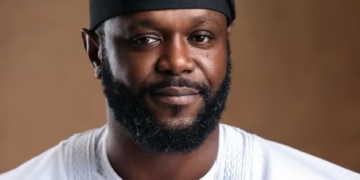
A former NECO staff member has been jailed for 12 years over certificate forgery and false employment claims after ICPC investigation
A dismissed staff member of the National Examinations Council, Abdulwahab Sule, has been sentenced to 12 years’ imprisonment for certificate forgery and related corrupt practices by a Niger State High Court sitting in Minna.
Also read: Just In: Police barricade Obanta Club, Daniel’s residence over planned BATOGD rally
The judgment was delivered by Justice Abdullahi Mikailu following prosecution by the Independent Corrupt Practices and Other Related Offences Commission.
Sule was found guilty on three counts, including dishonest use of forged documents, possession of falsified certificates, and making false statements to secure employment.
Court proceedings revealed that the convict used a forged diploma certificate allegedly issued by the Federal University of Technology, Yola, now Modibbo Adama University, Yola, to gain employment with NECO in 2009.
Investigations showed that the certificate did not originate from the institution, a finding confirmed during official verification.

The court further established that Sule had not completed his studies and still had outstanding courses at the time he claimed to have graduated.
He was also found to have made false declarations to NECO’s Human Resource Directorate in 2020 regarding his academic qualifications.
During investigation, Sule reportedly admitted that he paid N30,000 to obtain the forged certificate from an unidentified individual.

Justice Mikailu sentenced him to 12 years on the first count, 10 years on the second, and two years on the third. The sentences will run concurrently, meaning he will serve 12 years in prison.
In a statement, ICPC spokesperson J. Okor Odey reaffirmed the commission’s commitment to sanitising public institutions and warned that forgery and corruption would be met with strict legal consequences.

Also read: JUST IN: Tinubu sacks finance minister Wale Edun
The commission also urged organisations to strengthen routine verification of staff credentials to prevent similar cases and protect institutional integrity.

David Okere is a journalist and contributor to Freelanews.com, covering business, governance, public affairs, and human-interest stories with a commitment to accuracy, balance, and public interest reporting.