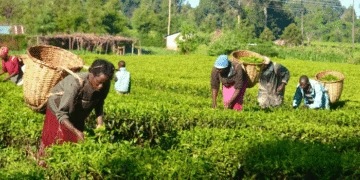
Shea Nut export ban review begins as FG consults stakeholders on impact on jobs, processing and foreign exchange earnings
The Federal Government on Thursday assured stakeholders in Nigeria’s shea industry that it will conduct a comprehensive shea nut export ban review, citing concerns over the six-month restriction’s impact on producers, exporters and foreign exchange earnings.
Also read: Nigeria shea nut export ban sparks positive shift for local industry
Jumoke Oduwole, Minister of Industry, Trade and Investment, gave the assurance during a Stakeholders’ Validation Session on the Raw Shea Nut Ban held in Abuja.
She said the ministry would submit an objective and evidence-based briefing to President Bola Tinubu after concluding nationwide consultations across the shea value chain.
The Federal Government had, on 26 August 2025, imposed a temporary six-month ban on the export of raw shea nuts to boost domestic processing and value addition.

The policy formed part of a broader industrial strategy aimed at repositioning Nigeria from a raw commodity exporter to a global hub for refined shea products.
Oduwole acknowledged that industrialisation, trade expansion and investment attraction may appear to pull in different directions, but insisted they share a common goal of economic growth and prosperity.
She said all stakeholder submissions would be carefully reviewed and consolidated before a decision is taken on whether to extend or defer the ban.
“We recognise the right of citizens to earn a living and contribute to national development,” she said, adding that the ministry would provide the President with balanced and factual information to guide further action.
John Enoh, Minister of State for Industry, described the original ban as “difficult but necessary,” stressing the need to prioritise raw material availability for local processors.

Similarly, Abubakar Kyari, Minister of Agriculture and Food Security, urged stakeholders to provide verifiable data to ensure future policy decisions are grounded in measurable impact.
The shea sector, concentrated largely in northern Nigeria, supports millions of rural women.
Before the ban, nearly all shea nuts were exported in raw form, with Nigeria capturing less than one per cent of the global shea market, valued at over $6.5 billion.

Since the policy’s introduction, domestic processing has expanded, farmer incomes have improved and shea butter exports have reportedly surged by 250 per cent within a year.
Also read: US tariff threatens Nigeria’s AGOA gains, diversification– NACC president
Officials said the ongoing Shea Nut Export Ban Review represents a delicate balancing act between industrial ambition, investor confidence and grassroots livelihoods, as the government seeks a sustainable path for the sector’s future.

Quadri Olaitan is a journalist and contributor to Freelanews.com, covering news, public affairs, and human-interest stories.