
Lassa Fever outbreak in Nigeria sees 318 cases and 70 deaths, as NCDC intensifies response across five high-risk states
The Nigeria Centre for Disease Control and Prevention has confirmed 318 cases and 70 deaths in the ongoing Lassa Fever Outbreak in Nigeria, underscoring a troubling rise in infections during the early months of 2026.
Also read: Edo health commissioner declares lassa fever outbreak
Director General of the agency, Dr Jide Idris, announced the figures during a press briefing in Abuja on Friday, stating that the data covers the period from late December 2025 to February 15, 2026.
Dr Jide Idris disclosed that 1,469 suspected cases have been recorded nationwide within the same timeframe.
The outbreak carries a case fatality rate of 22 per cent, a stark reflection of the disease’s severity when diagnosis and treatment are delayed.

According to the agency, five states, Bauchi, Ondo, Taraba, Edo and Plateau, account for 91 per cent of confirmed infections.
Within those states, 10 local government areas have emerged as persistent hotspots, largely linked to environmental conditions and high rodent populations.
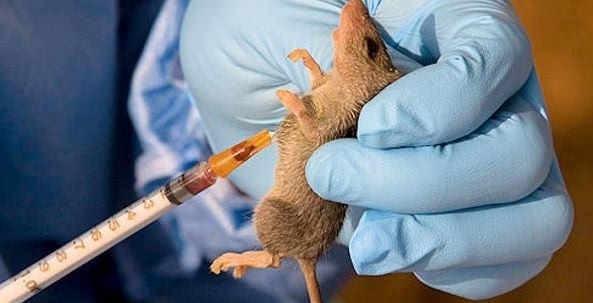
Lassa fever is an acute viral haemorrhagic illness transmitted primarily through contact with food or household items contaminated by the urine or faeces of infected multimammate rats, common across parts of West Africa.
Secondary transmission can occur from person to person, particularly in healthcare settings through contact with bodily fluids, exposing medical personnel to heightened risk.
In response to the escalating crisis, the Nigeria Centre for Disease Control and Prevention has activated its Incident Management System and deployed Rapid Response Teams to eight states.

The teams are tasked with strengthening surveillance, improving case management, expanding laboratory diagnostics and intensifying community sensitisation efforts.
Dr Jide Idris called on state governments to scale up contact tracing, enforce strict infection prevention and control measures in health facilities, and address financial barriers that often delay patients from seeking treatment.
The agency has distributed critical medical supplies, including personal protective equipment and the antiviral drug ribavirin.
Dialysis machines have also been delivered to Edo, Kaduna, Lagos, Nasarawa and Plateau states to manage severe complications such as kidney failure in critically ill patients.
Public health officials emphasised that the Lassa Fever Outbreak in Nigeria is largely preventable through simple but consistent measures.
These include storing grains in rodent proof containers, maintaining clean environments to reduce rat infestations, practising good hand hygiene and seeking immediate medical care for symptoms such as fever, headache, sore throat, muscle pain, vomiting, facial swelling or unexplained bleeding.

The agency urged Nigerians to remain vigilant during the dry season peak transmission period and to promptly report suspected cases through local health facilities or its toll free line, 6232.
Also read: Lassa fever death toll hits 176 in Nigeria — NCDC
Health authorities warned that sustained community cooperation will be decisive in curbing the outbreak and preventing further loss of life.

Quadri Olaitan is a journalist and contributor to Freelanews.com, covering news, public affairs, and human-interest stories.