


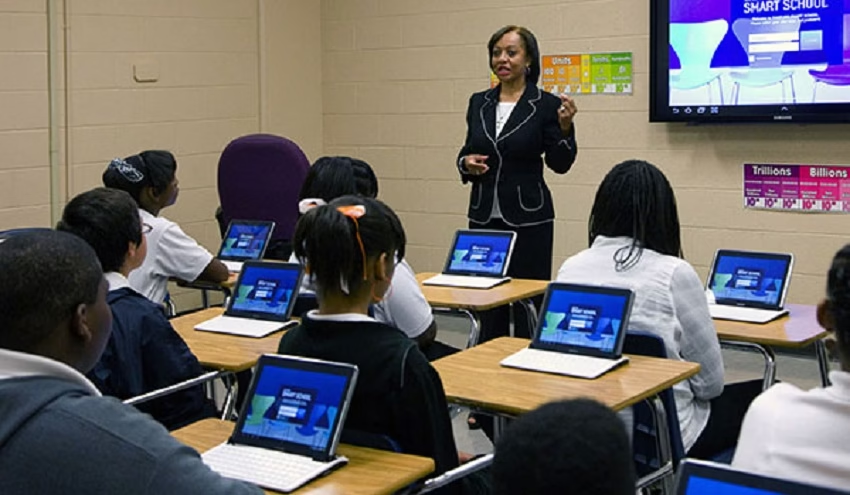

Nigeria has launched a nationwide digital education initiative, distributing smart boards to public schools to modernise classroom learning
Nigeria digital education initiative entered a new phase on Friday as the Federal Government and the Universal Basic Education Commission (UBEC) began distributing interactive smart boards to public schools across the country.
Also read: Tertiary Education Trust Fund unutilised funds face strict review
The Minister of Education, Dr Tunji Alausa, launched the digitalisation drive at Queen’s College, Yaba, Lagos, alongside UBEC Executive Secretary, Aisha Garba, and senior officials of the commission.
Dr Alausa described the initiative as “a bold declaration that Nigeria is ready to embrace the future of learning,” announcing that over 1,000 interactive smart boards would be distributed nationwide, alongside comprehensive teacher training for primary and junior secondary school tutors.
“Today’s event is more than a technological upgrade,” Alausa said. “Our goal is to ensure that every child, regardless of background or location, has access to quality, modern, technology-enabled education.

We are transforming Nigeria’s education system to meet the demands of the digital economy and build a globally competitive, knowledge-based society.”
He explained that the interactive boards will allow teachers to integrate multimedia, digital textbooks, and real-time engagement into lessons, helping students to learn through touch, exploration, and active participation rather than passive listening.
Alausa added that the Ministry, through UBEC, NITDA, and other partners, is extending broadband connectivity, digital tools, and training to schools nationwide.
This includes 250 desktop computers for second-chance schools, over four million core textbooks, and more than 419,000 library resource materials to enhance literacy and teaching capacity.
“Today we launch not just an initiative but a new era in Nigerian education—one that is inclusive, data-driven, and innovation-led,” he declared.
“Together, we will make Nigerian education a model of digital innovation in Africa.”
In her remarks, UBEC Executive Secretary, Aisha Garba, hailed the launch as a “major milestone in our collective journey towards transforming Nigeria’s basic education system through digital innovation.”

Garba noted that while the world is driven by technology, true digital transformation in education goes beyond devices and connectivity.
“It is about rethinking teaching and learning, making it more engaging, inclusive, and effective. It allows teachers to personalise instruction, enhances student participation, and bridges the gap between rural and urban learning environments,” she said.

She emphasised that the initiative would ensure that learners “from Lagos to Sokoto, from Port Harcourt to Maiduguri” have access to quality, globally relevant education.
Garba stressed that digital transformation in education is a long-term journey that requires collaboration, sustainability, and innovation.
Also read: Federal Government enforces free education in technical colleges
“With this initiative, we are shaping the future of Nigerian education. With the right tools, vision, and commitment, every child can learn, every teacher can innovate, and every school can transform,” she concluded.

Quadri Olaitan is a journalist and contributor to Freelanews.com, covering news, public affairs, and human-interest stories.


