


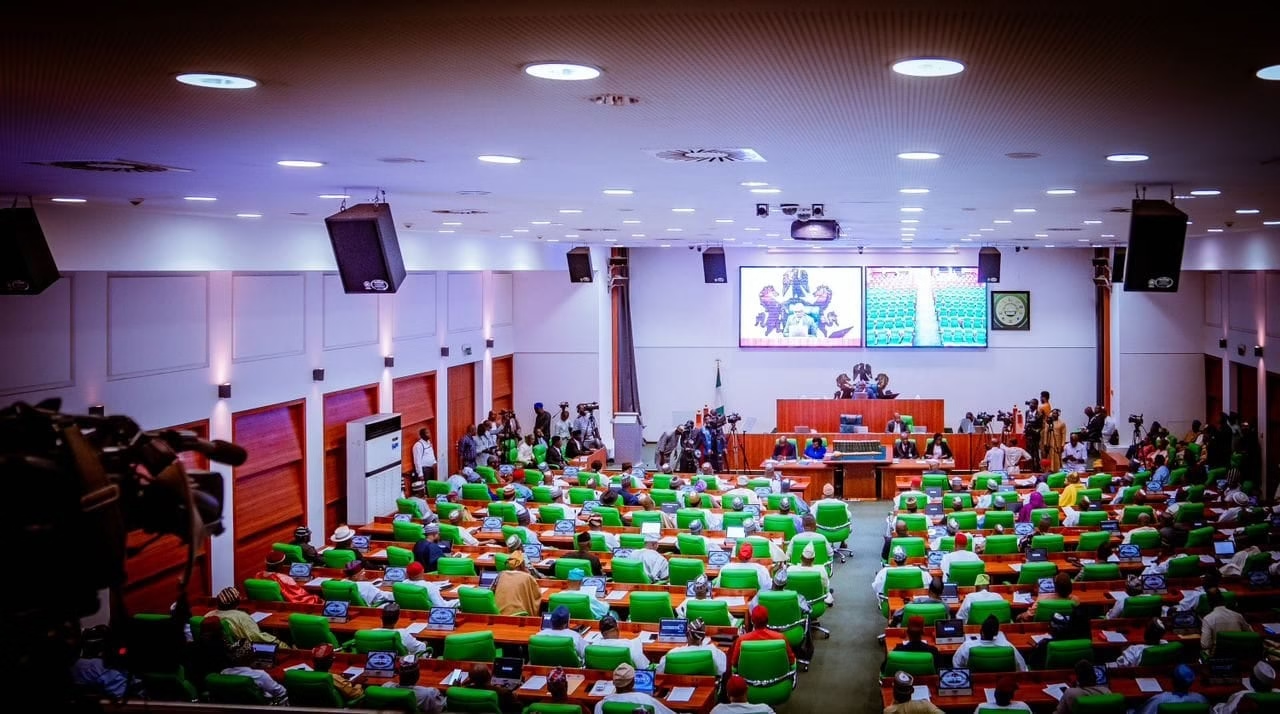

The House of Representatives has launched a probe into excessive tax deductions from workers’ salaries and multiple bank charges affecting Nigerians
The House of Representatives has inaugurated an ad-hoc committee to investigate rising concerns over excessive tax deductions from civil servants’ earnings and multiple, unclear bank charges imposed by commercial banks across Nigeria.
Also read: CBN survey shows taxes, interest rates hurting firms
The committee, chaired by Rivers lawmaker Kelechi Nwogu, was inaugurated in Abuja on Thursday by the Speaker, Tajudeen Abbas, amid mounting public frustration over unfair and unexplained financial deductions.
Many Nigerians, particularly civil and public servants, say they are being hit by overlapping taxes, levies, and service fees that significantly erode their take-home pay.
The country’s complex tax regime, involving deductions by federal, state, and local authorities, has been blamed for double taxation and poor transparency.

Some workers also allege that pension and housing deductions are not being properly remitted to the relevant agencies.
Commercial banks have also come under scrutiny for multiple service fees such as stamp duty, Value Added Tax (VAT), card maintenance, and transfer charges sometimes applied simultaneously on a single transaction.
In response to growing outrage, the House of Representatives constituted the Nwogu-led committee to probe these concerns and demand accountability from the Central Bank of Nigeria (CBN), the Federal Inland Revenue Service (FIRS), and commercial banks.
Speaking at the inauguration, Nwogu said the investigation was prompted by widespread complaints from Nigerians over “confusing and often unexplained deductions” by both government bodies and financial institutions.
He described the probe as a “pivotal step toward fairness and accountability”, saying lawmakers could no longer ignore the frustrations of citizens facing repeated, unjust financial losses.
“We are responding to citizens’ concerns to ensure that financial practices in both the public and private sectors align with the principles of justice and equity,”
According to him, the committee will examine the nature, legality, and application of taxes, levies, and deductions affecting public servants and probe possible cases of non-remittance.
It will also review the range of bank charges and VAT applications on existing fees to ensure fairness and transparency in the financial system.
Nwogu vowed that the committee would not shy away from making “far-reaching recommendations,” stressing that the mission is to “identify irregularities, recommend reforms, and protect the rights of Nigerians.”

He also urged full cooperation from regulatory agencies, banks, and civil society groups to ensure the investigation produces practical, citizen-centred reforms.

Earlier, Speaker Tajudeen Abbas, represented by the Chief Whip, Bello Kumo, said the National Assembly would not stand by while Nigerians are subjected to exploitative financial practices.
“Public servants who work tirelessly for our nation should not bear the burden of unjust deductions and excessive bank charges that reduce their hard-earned income,”
Abbas expressed concern that multiple and unclear bank charges were undermining public trust in financial institutions and worsening citizens’ economic hardship.
He urged the committee to carry out its assignment with integrity, diligence, and fairness, engaging stakeholders to uncover the truth and propose concrete solutions.
“Together, we have an opportunity to restore public confidence and strengthen financial justice in Nigeria,” Abbas said.
Also read: Tinubu tax reforms trigger growing public anger
The committee’s findings are expected to guide policy reforms aimed at promoting financial transparency, consumer protection, and equitable taxation across Nigeria’s banking and public sectors.

Quadri Olaitan is a journalist and contributor to Freelanews.com, covering news, public affairs, and human-interest stories.


